Summary:
There’s a version of chimney damage you can see from the driveway — loose bricks, white staining, a structure that doesn’t look quite plumb anymore. And then there’s the version that’s invisible until water is running down your living room wall or a chimney inspector tells you the flue liner has been cracked for years.
Rhode Island homeowners deal with both. The state’s median home was built in 1961, which means most chimneys here have been weathering freeze-thaw cycles, coastal salt air, and decades of heating seasons longer than their original materials were designed to handle. Knowing when you’re looking at a repair versus a full chimney renovation could save you thousands — or prevent a much larger problem down the road.
The original mortar joints on a chimney have a design life of roughly 25 to 30 years. If your home was built in 1961 — right around the state median — that mortar is now somewhere between 30 and 35 years past that milestone. Even if it looks intact from the ground, there’s a reasonable chance it’s been compromised for a while.
Rhode Island’s climate accelerates this in ways that warmer, drier states simply don’t experience. Freeze-thaw cycles inland around Providence and the Blackstone Valley put masonry through repeated stress every winter — water seeps into micro-cracks, freezes, expands, and widens the gap. Coastal communities like Newport, Narragansett, Barrington, and Bristol add salt air corrosion into the mix, which attacks the calcium compounds in mortar and weakens joints even faster.
The result is that chimney deterioration in Rhode Island tends to be more advanced than it appears, and earlier than homeowners expect.
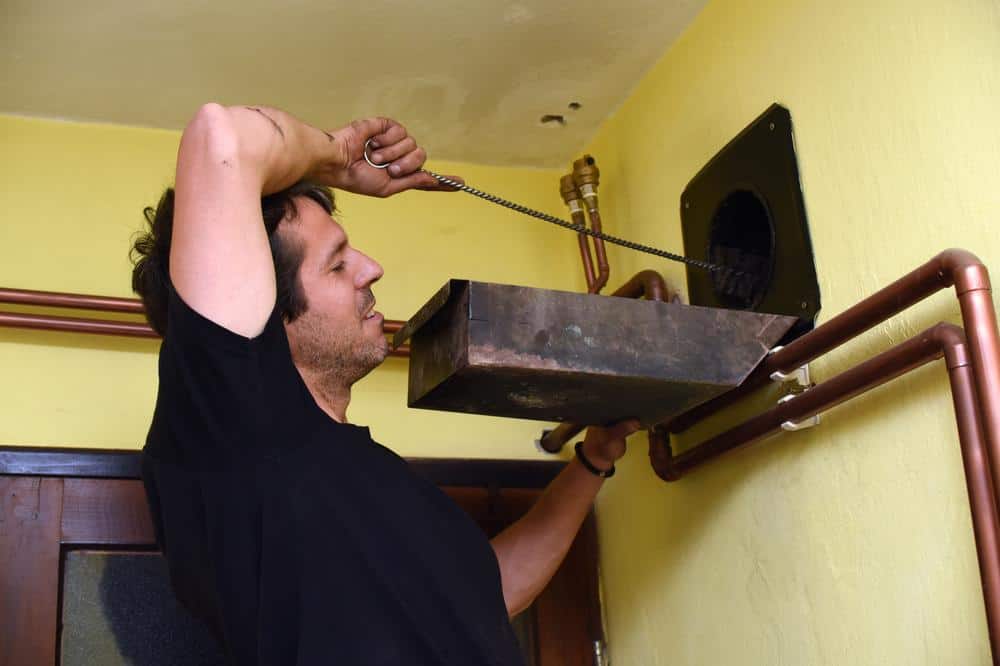
When people notice cracked or spalling bricks on their chimney, the instinct is often to assume it’s cosmetic — surface wear, nothing urgent. Sometimes that’s true. But more often, it’s the visible surface of a deeper problem that’s been developing for years inside the masonry.
Mortar joints are what hold the brick assembly together and, just as importantly, they’re what shed water away from the chimney’s interior. When those joints start to fail — crumbling, receding, or developing hairline cracks — water gains a direct path into the structure. From there, Rhode Island’s winters do the rest. Each freeze-thaw cycle widens the gap a little more, and what started as surface deterioration becomes structural damage.
Spalling bricks — where the face of the brick is flaking or popping off — are a sign that this process is already well underway. The brick itself is absorbing moisture and being damaged by the expansion cycle. Once bricks start spalling, the damage tends to spread faster than it arrived, because the compromised surface absorbs even more water.
Tuckpointing — the process of removing deteriorated mortar to a depth of about half an inch and replacing it with properly matched new mortar — is the standard repair for early-to-moderate joint failure. Done correctly by a professional, it lasts approximately 30 years. But it has to be done right. Applying new mortar over old without proper removal doesn’t work. And using modern Portland cement on an older lime-mortar chimney can actually cause bricks to crack, because the harder mortar doesn’t flex the way the original assembly was designed to.
The point isn’t to alarm you — it’s that the difference between a $300 tuckpointing job and a $3,000 partial rebuild is usually just time. The underlying damage is the same; it’s the extent that changes when it’s left alone.
A chimney that appears to be leaning, tilting, or visibly pulling away from the house is not a cosmetic issue. It’s a structural one, and it typically means the problem has moved well past the point where surface repairs are an option.
Leaning usually indicates that the mortar joints have failed to the point where the chimney’s own weight is causing it to shift. In some cases, it points to foundation-level failure. Either way, the repair isn’t a matter of straightening the structure — it’s a partial or full rebuild, because the existing assembly no longer has the integrity to support itself safely.
This is one of those situations where waiting genuinely isn’t a viable option. A leaning chimney is a falling hazard, and the structural movement tends to accelerate once it starts. If you’re seeing visible separation between your chimney and the house, or a tilt that wasn’t there before, that warrants an inspection as soon as you can schedule one.
It’s also worth knowing that many of the most serious structural problems aren’t visible from the ground at all. The top two feet of a chimney — the area most exposed to weather, freeze-thaw cycles, and direct precipitation — is where deterioration typically starts and where the worst damage tends to concentrate. A cracked or missing chimney crown, which is the concrete or mortar cap that seals the top of the chimney, is one of the most common entry points for water and one of the most frequently overlooked. You’d need to be on the roof or have a camera inspection to see it clearly.
Efflorescence — the white mineral staining that sometimes appears on chimney exteriors — is another signal worth taking seriously. It’s not just a cosmetic blemish. It means water is actively moving through the masonry, carrying dissolved salts to the surface as it evaporates. The staining itself is harmless, but what it indicates isn’t.
Want live answers?
Connect with a Certified Chimney Inspections expert for fast, friendly support.
This is the question most homeowners are really asking when they start researching chimney damage. The honest answer is: it depends on what’s actually happening inside the chimney, which you usually can’t determine from the outside.
A minor tuckpointing job and a full chimney rebuilding project can look similar from the yard — some cracked mortar, some discoloration, maybe a brick or two that looks off. What separates them is the extent of the damage, how far it’s progressed into the structure, and whether the flue liner and crown are still intact. That’s why a professional inspection isn’t just a formality before renovation work — it’s the only way to scope what actually needs to be done.
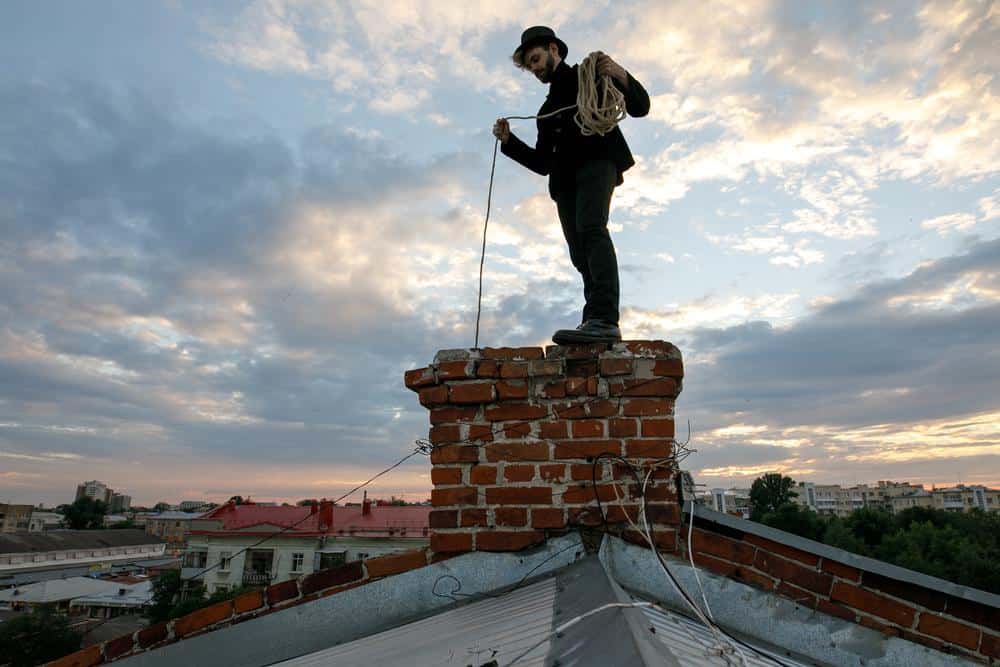
Chimney renovation isn’t a single service — it’s a spectrum of work that can range from targeted masonry repair to a complete rebuild from the roofline up, depending on what the inspection reveals.
At the less intensive end, renovation might mean comprehensive tuckpointing across multiple courses of brick, replacing a damaged chimney crown, installing a new cap, and applying a waterproof sealant after the masonry has fully cured. This addresses the primary entry points for water and restores the chimney’s structural integrity without replacing the entire structure.
In more advanced cases, renovation involves partial rebuilding — typically the top section of the chimney, which is most exposed to weather and where deterioration tends to be most severe. This means taking down the damaged courses of brick and rebuilding them with new materials, matched as closely as possible to the existing masonry. For historic homes in Providence’s College Hill neighborhood or older properties along Newport’s historic districts, that matching process requires some care — the wrong mortar composition or brick type can create new problems while solving old ones.
Full chimney rebuilding — taking the structure down to the roofline and rebuilding entirely — is reserved for cases where the damage is too extensive for partial repair to be a lasting solution. This is more common than people expect in Rhode Island, given the age of the housing stock and the decades of freeze-thaw stress most chimneys here have absorbed.
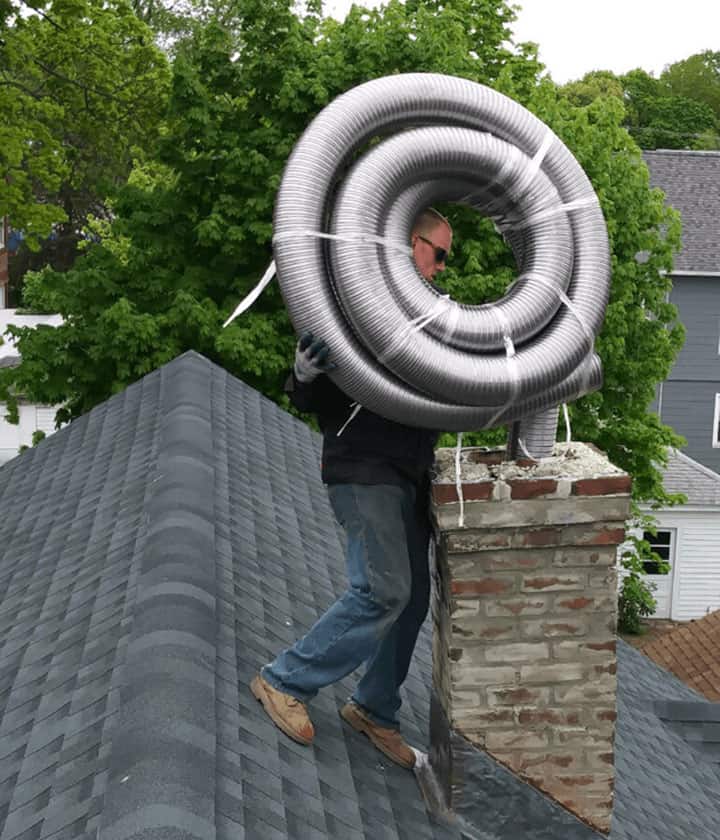
Chimney restoration can also include relining the flue. Cracked clay tile liners — common in chimneys built before the 1980s — can allow combustion gases, including carbon monoxide, to enter the home. Relining addresses both the safety concern and the structural one, and it’s often part of a comprehensive renovation rather than a standalone repair.
The cost escalation dynamic in chimney deterioration is one of the most consistent patterns in the industry. A repair that costs $300 today doesn’t stay a $300 repair if it’s left alone — it becomes a $3,000 partial rebuild, and a $3,000 partial rebuild left unaddressed can become a $10,000 or more full replacement. The underlying damage is the same; what changes is how far it’s spread.
Rhode Island’s climate compresses that timeline. A chimney in a warmer, drier region might deteriorate slowly enough that a homeowner has several years to decide when to act. Here, the combination of freeze-thaw cycles, coastal salt air, and long heating seasons means damage that’s already present tends to advance faster than it would elsewhere. Waiting one more winter isn’t a neutral decision — it’s a decision that lets the freeze-thaw cycle work on whatever cracks are already there.
There’s also the heating efficiency angle, which doesn’t get discussed enough. Rhode Island homeowners pay the highest average monthly heating bills in the country — around $189 per month. A deteriorated chimney system that’s allowing warm air to escape or functioning below its designed efficiency is contributing to that number. A properly renovated chimney isn’t just safer; it performs better and helps lower your heating costs.
And then there’s the National Grid factor, which is specific to Rhode Island. The gas utility can shut off service to homes with unsafe chimney or venting conditions — a situation that tends to surface at the worst possible time, in the middle of heating season, when scheduling and repair timelines are at their most compressed. Staying ahead of deterioration is the straightforward way to avoid that scenario entirely.
One thing worth saying clearly: an unused fireplace doesn’t exempt a chimney from maintenance. The masonry deteriorates regardless of whether you’re lighting fires. Water still enters through compromised joints and crowns, freeze-thaw cycles still do their work, and animals can still access an uncapped flue. The chimney’s structural condition is independent of how often the fireplace is used.
If your home was built before 1980, there’s a reasonable chance your chimney is somewhere on the deterioration spectrum — the only real question is where. The signs covered here — cracked bricks, failing mortar joints, efflorescence, a leaning structure, a damaged crown — are useful indicators, but none of them tell you the full story on their own. The damage that matters most is often what you can’t see from the ground.
The most practical first step is a professional inspection by a CSIA-certified technician who can assess the full system — masonry, crown, flue liner, and all — and give you an honest picture of what needs attention now versus what can wait. That’s where renovation planning actually starts: with a clear scope, not a guess.
We’ve been inspecting and renovating chimneys across Rhode Island since 2000, with the same core team and the same commitment to telling homeowners exactly what they’re dealing with — no more, no less. If you have questions about your chimney’s condition or want to schedule a free estimate, we’re here to help.
Continue learning: