Summary:
There’s a version of this you’ve probably heard before — get your chimney cleaned every year, chimney fires are dangerous, don’t put it off. All true. But if that message hasn’t moved you yet, it’s probably because it doesn’t feel specific to your situation.
Here’s what is specific: Rhode Island has some of the oldest housing stock in the country, heating costs that rank among the nation’s highest, and a coastal climate that does real damage to masonry year-round. If your home was built before 1970 — and statistically, it probably was — your chimney deserves more than a generic reminder. It deserves a real look.
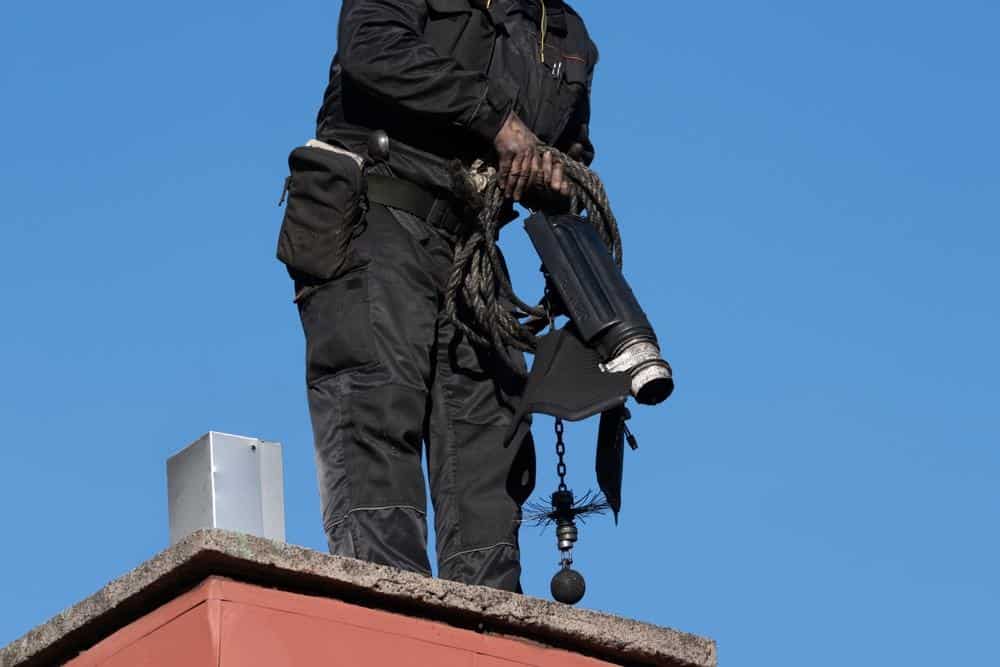
A chimney sweep isn’t just someone who runs a brush through your flue and calls it done. A thorough cleaning involves removing soot, creosote, and debris from the firebox, smoke chamber, and flue liner — using rotary brushes, professional-grade vacuums, and in many cases a camera to document what’s going on inside the system.
Most professional sweeps also conduct a basic inspection as part of the visit, checking for visible cracks, blockages, deteriorating mortar, and signs of moisture intrusion. The goal isn’t just cleanliness — it’s understanding the condition of a system you’re depending on to vent combustion gases safely out of your home.

Creosote is the byproduct of burning wood. When smoke rises through a cooler flue, the unburned particles condense on the liner walls and harden over time. It’s unavoidable — every wood-burning fire produces it to some degree. The question is how much has accumulated and what stage it’s at.
Stage 1 creosote is light and dusty, relatively easy to remove with standard brushing. Stage 2 looks like shiny black flakes and requires more specialized tools. Stage 3 is the one that should genuinely concern you — it’s a thick, tar-like glaze that restricts airflow, resists standard cleaning methods, and is highly combustible. A chimney fire fueled by Stage 3 creosote can burn at over 2,000 degrees Fahrenheit.
The reason annual cleaning matters so much is that creosote doesn’t announce itself. You can’t see it from your living room. You won’t smell it until conditions are right. By the time a homeowner notices something is off — a smoky odor when the fireplace isn’t in use, poor draft, visible staining — the buildup may already be significant.
One detail that surprises a lot of people: just one-tenth of an inch of soot buildup can reduce your fireplace’s heat output by 50 percent. In Rhode Island, where home heating costs average $189 per month — among the highest in the country — that’s not a trivial inefficiency. A dirty chimney isn’t just a fire risk. It’s costing you money every time you light a fire.
This is one of the most common reasons people put off chimney service, and it’s worth addressing directly. The logic makes sense on the surface — if you only use your fireplace a handful of times a year, how much could really accumulate? More than you’d expect, and that’s only part of the picture.
Even a chimney used occasionally produces creosote. A few fires a season is enough to build up deposits, especially if the wood isn’t fully seasoned or the fire burns at a lower temperature. But beyond creosote, there are factors that have nothing to do with how often you light a fire.
Rhode Island’s freeze-thaw cycles are particularly hard on masonry. Temperatures in the state frequently cross the freezing threshold multiple times in a single week during shoulder seasons, and water that gets into small cracks expands when it freezes, widening those cracks over time. For homes near Narragansett Bay or the Atlantic coast — Newport, Barrington, Bristol, Narragansett, and Westerly — salt air adds another layer of corrosion to brick, mortar, and metal chimney components year-round.
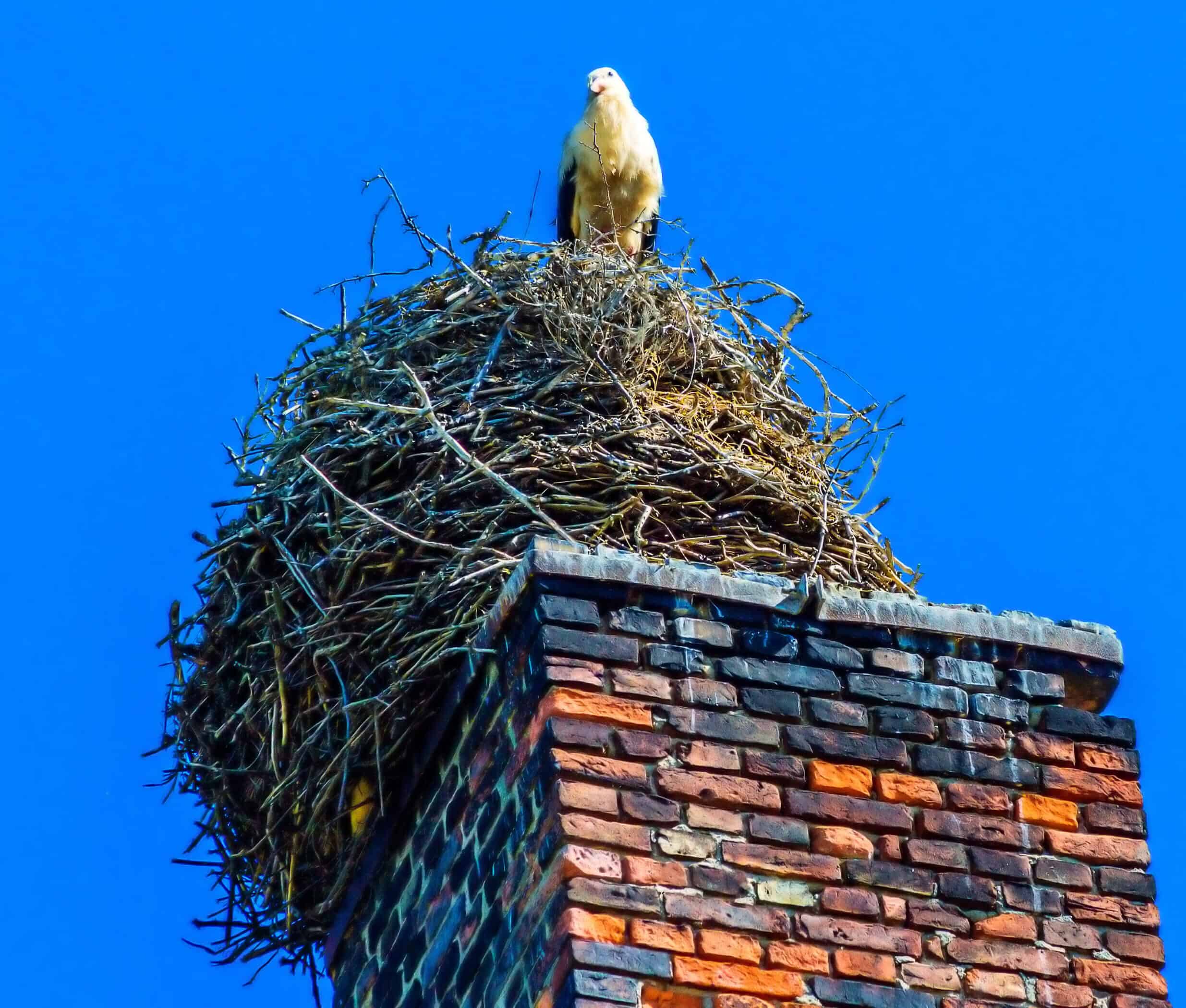
Then there’s the matter of animals. Chimney swifts, starlings, squirrels, and raccoons treat unused chimneys as ideal nesting sites. A blockage from a nest can be just as dangerous as creosote when it comes to carbon monoxide venting. Carbon monoxide is odorless and invisible — you won’t know there’s a problem until someone in the house is already affected.
The NFPA and the Chimney Safety Institute of America both recommend annual chimney inspection regardless of use frequency. That recommendation exists precisely because the risks don’t scale with how often you use the fireplace — they exist whether you light one fire a year or fifty.
Want live answers?
Connect with a Certified Chimney Inspections expert for fast, friendly support.
Rhode Island’s median home was built in 1961. That means the average chimney in this state is over 60 years old — and many contain original clay tile flue liners that were never designed to last indefinitely without inspection or maintenance.
Clay liners crack, spall, and deteriorate. When they do, combustion gases — including carbon monoxide — can migrate through those gaps into the living space. The problem is that this kind of damage is invisible from the outside and often invisible from below without a camera. It doesn’t produce symptoms until conditions are exactly wrong.
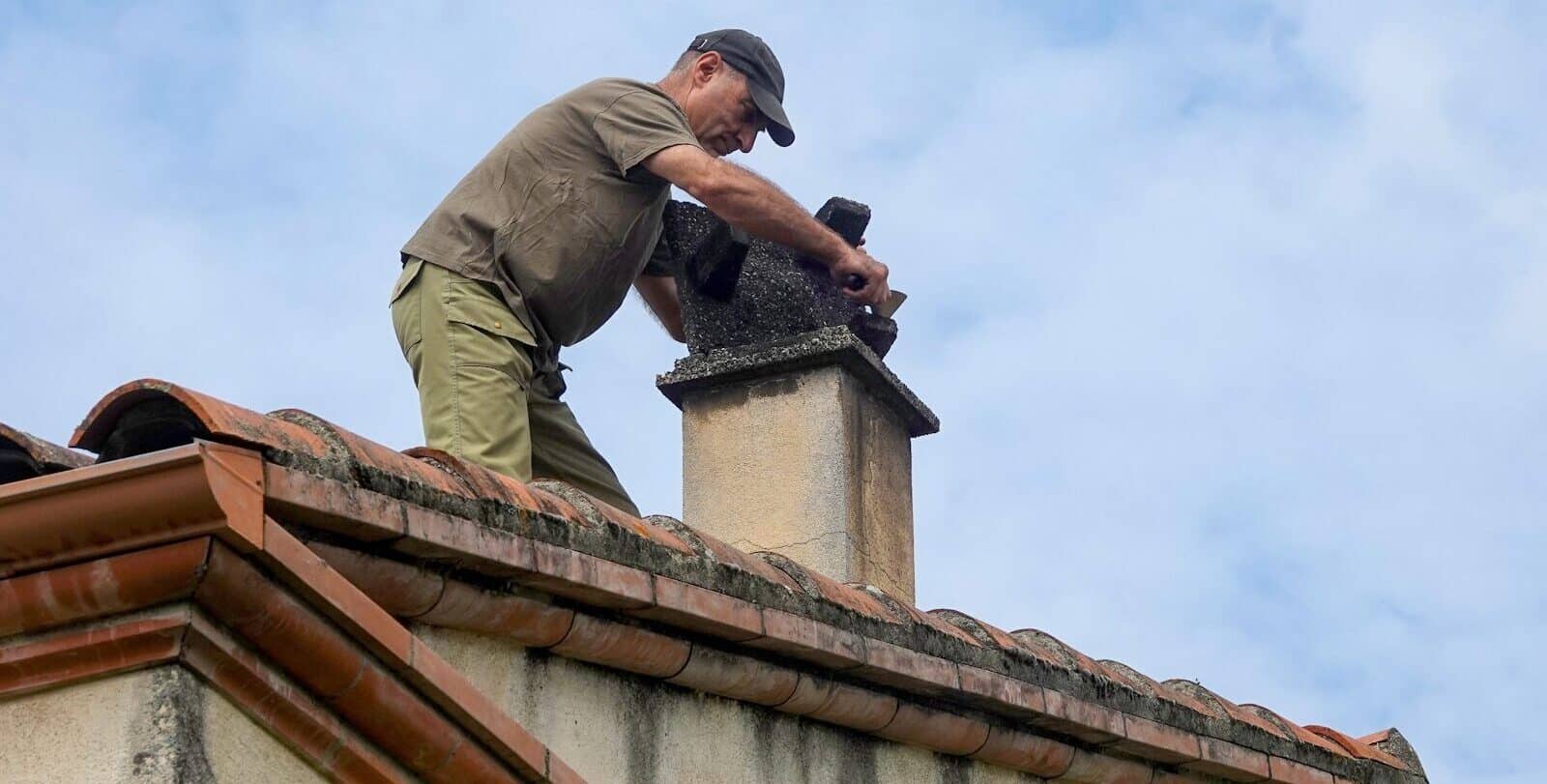
If your home was built before 1975, there’s a reasonable chance your chimney has never had its liner replaced. Clay tile liners from that era were standard construction, and they’ve held up reasonably well in many cases — but “reasonably well” isn’t the same as “structurally sound.” Sixty years of thermal cycling, moisture intrusion, and freeze-thaw stress adds up.
The communities with the highest concentration of this kind of housing stock are also some of Rhode Island’s most established neighborhoods — Providence, Pawtucket, Woonsocket, Cranston, and the historic districts of Newport and Bristol. These are beautiful homes with a lot of original character, and original chimneys are part of that character. They’re also systems that deserve a closer look than a newer home would require.
A Level 2 chimney inspection — which includes a video scan of the flue — is the only reliable way to assess the condition of an older liner. It’s required any time you’re selling a home, after a chimney fire, or when making changes to the heating system, but it’s also worth doing if you’ve moved into an older Rhode Island home and have no documentation of the chimney’s history. A lot of homeowners in this state fall into that category.
The inspection isn’t about finding problems to fix. It’s about knowing what you’re dealing with so you can make an informed decision. Sometimes the liner is in better shape than expected. Sometimes it needs relining. Either way, you know — and that knowledge has real value when you’re protecting a home worth several hundred thousand dollars or more.
Many homeowner insurance policies include language requiring that chimneys and fireplaces be properly maintained. If a chimney fire occurs and the insurer finds evidence of neglected maintenance — significant creosote buildup, a known structural issue that wasn’t addressed — it can complicate or void the claim.
Keeping a record of annual chimney sweep services and inspections is a straightforward way to demonstrate that you’ve done your part as a homeowner. Beyond insurance, there’s the National Grid dimension that’s specific to Rhode Island. National Grid is the state’s dominant gas utility, and chimney or venting issues can trigger service shutoffs. When that happens, it’s not just inconvenient — it’s a heating emergency, especially in the middle of a Rhode Island winter.
When hiring a chimney sweep in Rhode Island, CSIA certification is the industry’s most credible professional credential — it requires passing a rigorous exam covering fire science, NFPA 211 standards, and building codes, with recertification required every three years. It’s not a marketing claim; it’s a verifiable standard. Ask whether the technician coming to your home is CSIA certified, not just the company in general.
Red flags in this industry are well-documented: unusually low prices used to get in the door, high-pressure recommendations for repairs that weren’t mentioned in a prior inspection, requests for immediate cash payment, and no written estimate before work begins. Reputable companies provide written, itemized estimates, show up on time, and explain what they found without pushing you toward work you may not need.
Annual chimney sweep services aren’t complicated in concept — clean the flue, inspect the system, document the condition, address anything that needs attention. What makes the difference is who’s doing it and whether they actually know what they’re looking at.
Rhode Island’s housing stock, climate, and coastal geography create conditions that reward experience. A technician who’s spent years working on 60-year-old masonry chimneys in Providence County understands things that don’t show up in a training manual.
We’ve been doing this work since 2000, with the same core team and the same standards throughout. Every technician on our team holds CSIA certification. We offer free estimates on repairs, in-house financing when a larger project comes up, and a retail stove showroom if you’re thinking about a new wood, pellet, or gas stove. If you’re ready to schedule a cleaning or just want to understand what your chimney actually needs, reach out to Certified Chimney Inspections — we’ll give you a straight answer.
Continue learning: