Summary:
Most homeowners don’t think about their fireplace until something goes wrong, or until they realize it’s been sitting there, unused, looking like it belongs in a different decade. If your fireplace is from the 1980s or 1990s, there’s a good chance it’s both dated in appearance and underperforming on efficiency. The good news is that restoration today isn’t about preserving the old look. It is about transforming what you already have into something that works for your home and your life. Here’s what that looks like in 2026, and why it matters especially if you live in Rhode Island.
There’s a common assumption that fireplace restoration means a cleaning and maybe some fresh paint. In truth, it is a much more complete process and a much bigger opportunity than most homeowners realize.
A proper restoration starts with a thorough inspection of the entire system: the firebox, the flue liner, the mortar joints, the damper, the crown, and the structural integrity of the surround itself. From there, the work branches in two directions simultaneously. The structural side addresses what’s failing, such as repointing deteriorated mortar, stabilizing the firebox, repairing or replacing a damaged flue liner, and correcting any ventilation issues that cause smoke to back up into the room. The aesthetic side addresses what’s outdated, including replacing the surround material, updating the facing, adding new tile or stone, and extending the design from floor to ceiling to create a genuine architectural focal point.
These two tracks don’t have to happen separately. The best restorations handle both at once, ensuring you aren’t patching a structurally sound fireplace only to have it look tired, or beautifying a system that hasn’t been properly inspected in years.

If you’ve been browsing home design content lately, you’ve probably noticed that fireplaces look very different than they did fifteen years ago. The heavy ornate surrounds, the painted brick, and the chunky wooden mantels are giving way to something cleaner, more intentional, and more architectural.
Natural stone is leading the shift. Charcoal slate, black marble, and raw textured stone are replacing smooth brick as the dominant surround material. These finishes work in both traditional homes and more contemporary spaces, which makes them a strong choice for Rhode Island’s diverse housing stock, ranging from the Federal-style colonials on Providence’s East Side to the newer construction in East Greenwich and Coventry.
Floor-to-ceiling extensions are another major trend. Rather than treating the fireplace as an isolated feature, homeowners are extending the stone or tile from the hearth all the way up the wall, making the fireplace the undeniable center of the room. It’s a significant visual upgrade that changes how the entire space feels.
Matte black finishes and rustic-modern combinations, such as reclaimed wood beams alongside streamlined inserts or raw stone textures paired with clean metal frames, are also gaining traction. The common thread across all of these trends is intentionality. People want their fireplace to look like it was designed, not just installed.
For homeowners in Bristol County’s waterfront communities or Newport County’s historic neighborhoods, this kind of aesthetic restoration also has a practical dimension, as a beautifully restored fireplace adds real value to a home in a market where buyers pay close attention to character and craftsmanship.
One of the most significant shifts in fireplace restoration right now is the move toward gas insert conversions, and it’s happening for good reason.
A traditional open masonry fireplace is, from an efficiency standpoint, not great. Most of the heat it produces goes straight up the flue, and when it’s not in use, it actively pulls conditioned air out of your home. Modern gas inserts change that equation dramatically. Efficiency ratings of up to 80% are common, compared to the 10 to 20 percent you’d typically get from an open wood-burning fireplace. That’s a fundamental change in how the appliance performs.
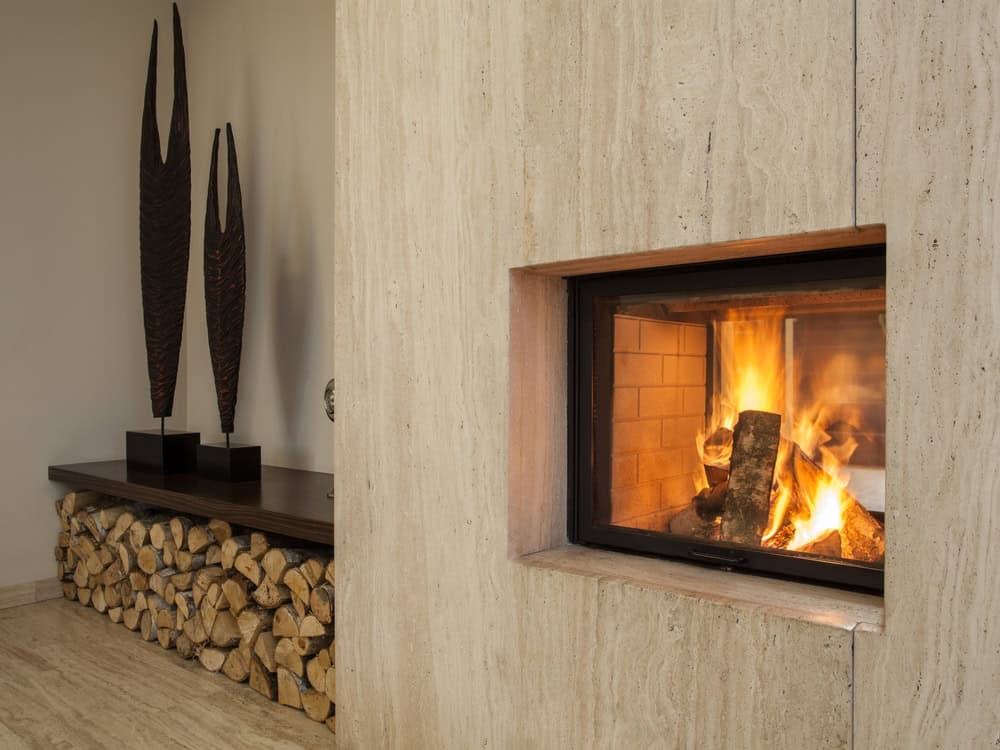
Beyond efficiency, gas inserts offer cleaner burning, reduced maintenance, and the ability to control heat output with precision. There’s no wood to store, no ash to clean, and no waiting for the fire to catch. For homeowners in Washington County’s coastal communities or Kent County’s suburban neighborhoods who use their fireplace regularly through the winter, that kind of convenience matters.
Converting an existing wood-burning fireplace to gas doesn’t require starting over. In most cases, the existing firebox and surround can be retained, meaning the conversion is incorporated into the restoration rather than treated as a separate project. We carry wood, pellet, and gas stoves in our retail showroom in North Smithfield, so if you’re considering a conversion, you can see and compare the options in person before making a decision. That’s something most chimney companies simply can’t offer.
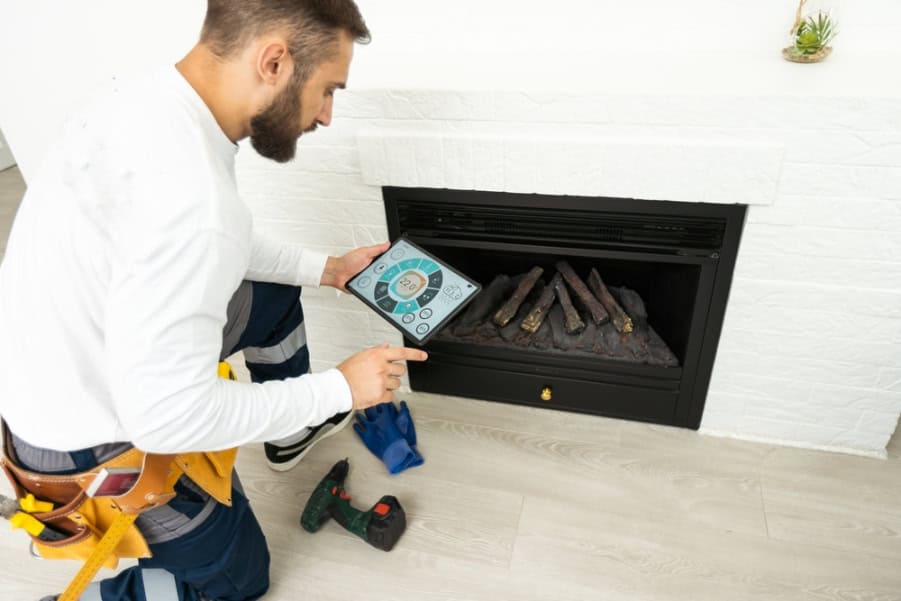
Smart fireplace features are also becoming more common in restoration projects. Gas-electric hybrids with remote temperature control and smart home integration are increasingly available, and they’re worth considering if you’re already opening up the system for a full restoration.
Want live answers?
Connect with a Certified Chimney Inspections expert for fast, friendly support.
Rhode Island has roughly 400 miles of coastline packed into the smallest state in the country. That geographic reality has direct consequences for every fireplace and chimney in Bristol, Kent, Newport, Providence, and Washington counties.
Salt air from Narragansett Bay works into mortar joints and attacks metal components continuously. Providence alone averages 80 to 100 freeze-thaw cycles per winter, meaning water infiltrates small cracks, freezes, expands, and forces those cracks wider dozens of times each season. A chimney system that might hold up for 15 years in an inland market can show serious deterioration in 8 to 10 years along the Rhode Island coast without regular professional attention. This isn’t theoretical. It’s what this climate does to masonry over time.
The damage that accumulates in a Rhode Island fireplace isn’t always visible from the living room. That’s what makes it dangerous. A firebox can look fine from the inside while the flue liner is cracked, the mortar joints are failing, or water has been infiltrating the crown for multiple seasons.
In Newport County, where properties along Bellevue Avenue and the Historic Hill neighborhood sit in direct ocean air, salt corrosion is relentless. Metal dampers, chimney caps, and flashing take a beating. Mortar formulated for standard inland conditions breaks down faster here. Historic properties in Newport’s Point neighborhood or along the waterfront in Bristol add another layer of complexity, because restoration work on these homes needs to use materials and techniques appropriate to the original construction, requiring real expertise rather than just general contractor knowledge.
Washington County’s coastal communities like Narragansett, Westerly, and Charlestown face similar conditions, compounded by the fact that many properties there are used seasonally. A vacation home sitting closed from March through June and then getting a fire lit in October without any inspection in between is a genuine safety concern. The fireplace hasn’t been looked at, the system hasn’t been evaluated, and no one knows what a winter of freeze-thaw cycles may have done to the structure.
In Providence County, the issue is slightly different but equally real. The city’s triple-deckers, Victorians, and colonial-era homes on College Hill and Benefit Street feature original masonry often 80 to 200 years old. These systems were built well, but they weren’t built to last forever without maintenance. Nor’easters drive rain horizontally into chimney systems that weren’t designed for that kind of storm force, and the salt influence from Providence Harbor adds corrosive pressure even miles from the open water.
The point is clear: conditions here mean that waiting until something is obviously wrong is almost always more expensive than addressing it beforehand.
One question we hear often is how to know if your fireplace needs restoration, or if it just needs a cleaning. The honest answer is that you often can’t tell from looking at it. A proper chimney inspection conducted by a CSIA-certified technician following NFPA 211 standards remains the only way to know what is happening inside the system. NFPA 211 requires annual inspections for a reason. The issues that matter most are the ones you can’t see from the living room.
Another common question concerns timing: when is the best time of year to do restoration work? Fall gets attention because homeowners think about heating season, but spring is an ideal window for masonry restoration. Mortar cures better in warm, dry conditions, and spring is when damage from the past winter’s freeze-thaw cycles is fresh and visible. If your fireplace came through another Rhode Island winter, a spring inspection and restoration assessment makes a lot of sense.
People also ask if restoration is worth it compared to replacing the fireplace entirely. In most cases, restoration is significantly more cost-effective. A full chimney rebuild can run $10,000 or more. Addressing mortar deterioration, stabilizing the firebox, and relining the flue proactively costs a fraction of that and extends the life of the system by decades.
Finally, homeowners ask about financing. Not everyone wants to absorb the full cost of a comprehensive restoration project upfront, and that’s completely reasonable. We offer in-house financing options, which makes it possible to complete the structural and aesthetic work together rather than deferring one or the other. We also provide free estimates, so there’s no cost or commitment involved in finding out what your fireplace needs.
Fireplace restoration in Rhode Island is about more than fixing cracks or refreshing a dated look, though it does both of those things well. It is about recognizing that your fireplace, located in a Bristol waterfront home, a Kent County colonial, or a Washington County coastal property, is a system that deserves real attention from people who understand it.
Our team at Certified Chimney Inspections has been doing this work with the same group of people since 2000. Every technician is CSIA-certified. We understand what Rhode Island’s climate does to masonry, we know how to restore historic fireplaces without compromising their character, and we can help you think through the aesthetic and efficiency options that make sense for your home.
If your fireplace has been sitting unused, looking tired, or raising questions you haven’t had answered yet, reach out to Certified Chimney Inspections for a free estimate. It’s a straightforward conversation and a good place to start.
Continue learning: