Summary:
You scheduled the inspection. Our technician came out, checked everything top to bottom, and left you with a clear report. You feel good about it, and you should.
But here is what we need to tell you: the inspection is the starting point, not the finish line. In Rhode Island especially, a chimney that passed in October can look very different by February. The nor’easters, the freeze-thaw cycles, and the salt air rolling in off Narragansett Bay do not pause simply because your chimney received a clean bill of health. Knowing what to watch for in between visits is how you stay safe.
Rhode Island is hard on chimneys. The median home in this state was built in 1961, which means most homeowners are living with chimney systems that are 60-plus years old, systems that weren’t designed for today’s heating appliances, today’s energy loads, or today’s building codes.
Add in the climate, and you have a recipe for things to go wrong quietly. Coastal communities in Newport County and Bristol County deal with salt air that corrodes metal chimney components like caps, dampers, flashing, and liners faster than most homeowners realize. Inland areas in Providence County and Kent County face repeated freeze-thaw cycles that expand moisture trapped in masonry by roughly nine percent with every cycle, slowly cracking mortar joints and clay tile liners from the inside out. Washington County experiences both issues.
None of this waits for your next scheduled inspection.
It is worth understanding why Rhode Island is particularly demanding on chimney systems, because once you do, the between-inspection maintenance steps make complete sense.
The freeze-thaw problem is relentless. Water gets into small cracks in the mortar or the chimney crown. When temperatures drop, that water freezes and expands. When it warms up, it contracts. Over a single winter, that cycle can repeat dozens of times. Each repetition widens the crack a little more. By spring, what was a hairline fracture in October can become a visible gap letting water into your home.
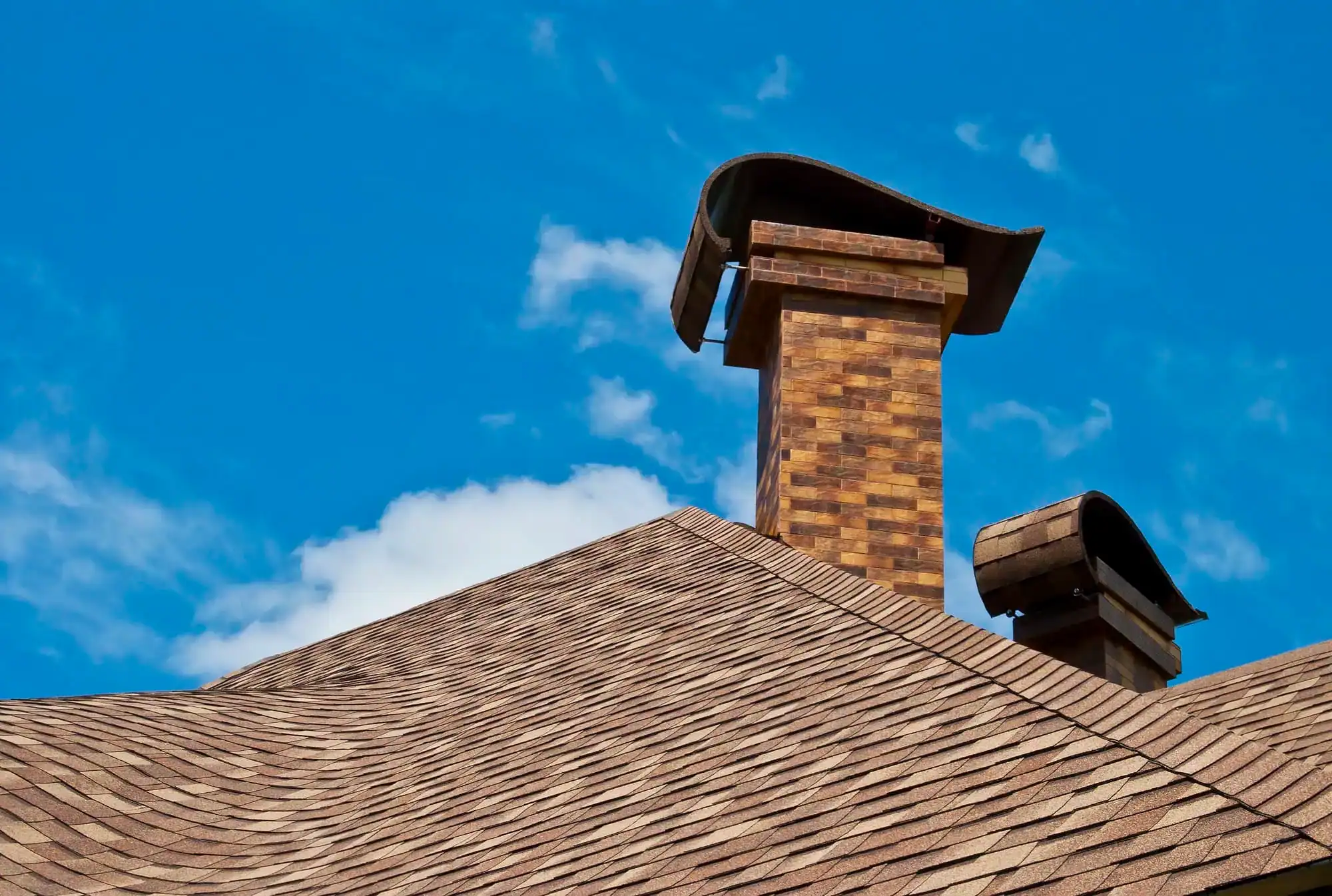
Salt air compounds this in the coastal counties. If you’re in Barrington, Bristol, Newport, Narragansett, or Little Compton, your chimney’s metal components are exposed to corrosive air year-round. Stainless steel caps and liners hold up better than older materials, but even those need to be checked. A cap compromised by corrosion stops doing its job, which is keeping rain, debris, and animals out of your flue.
Then there’s moisture saturation. Narragansett Bay’s influence keeps the air in Rhode Island consistently humid. That means masonry is almost never fully dry, making the freeze-thaw damage more severe than in drier inland states. A chimney in Providence or Coventry is dealing with freeze-thaw and constant moisture, which is a worse combination than either factor alone.
Understanding this helps explain why between-inspection monitoring is not just a nice extra. In Rhode Island, it is necessary.
You do not need to be a chimney professional to stay on top of things between visits. These five habits are practical, non-technical, and useful for any homeowner across Bristol, Kent, Newport, Providence, or Washington County.
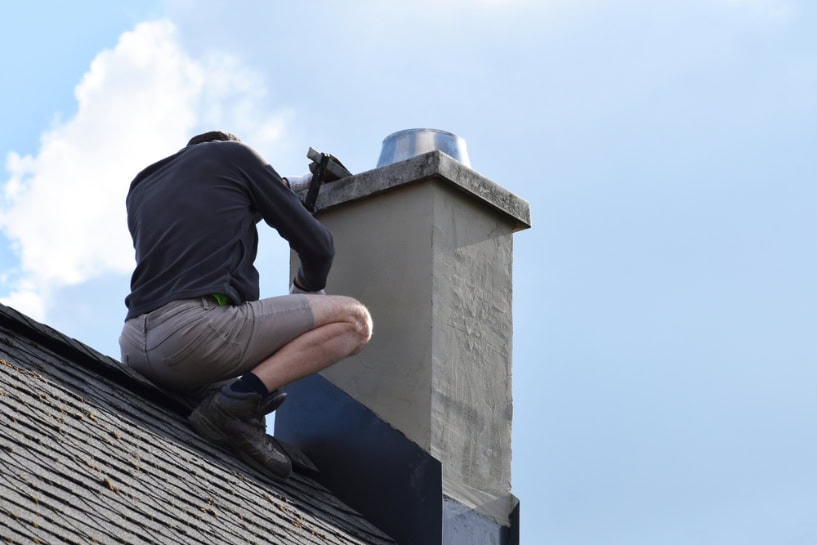
First, do a visual check of the chimney exterior a few times a year, especially after major storms. You’re looking for displaced or missing chimney caps, visible cracks in the crown at the top of the chimney, mortar joints that look crumbled or recessed, and any staining on the exterior masonry. You do not need to climb on the roof. A good pair of binoculars and a dry afternoon are enough to spot the warning signs that warrant a call.
Second, pay attention to how your fireplace drafts. If smoke backs up into the room, the draw changes, or you notice an unusual smell when the fireplace isn’t in use, something has shifted. It could be a blocked flue, a damaged damper, or an animal that took up residence. None of those situations improve on their own.
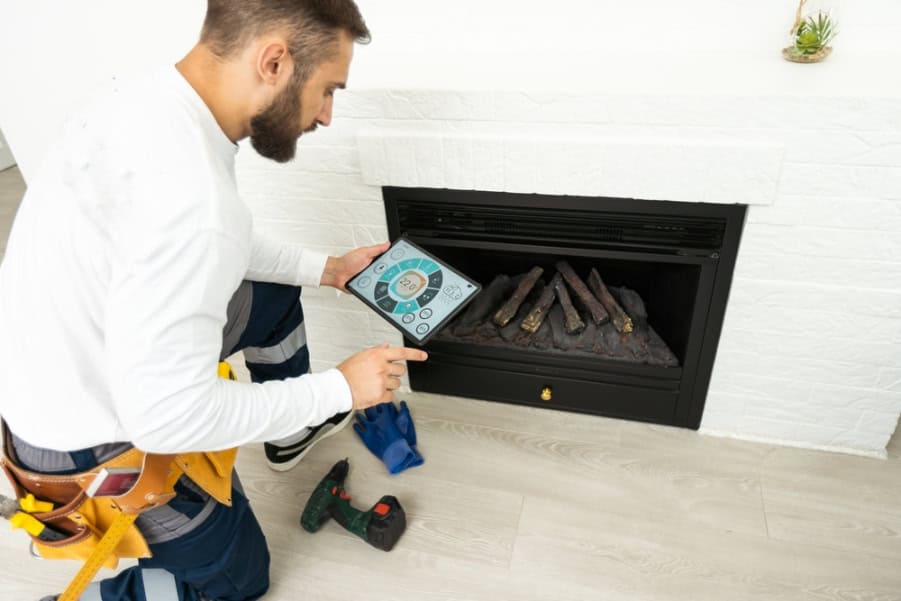
Third, check around the firebox for new cracks in the brick or mortar. Fireboxes take a lot of thermal stress. Small cracks can develop between inspections, and while not all of them are urgent, some indicate structural movement that needs addressing before the next heating season.
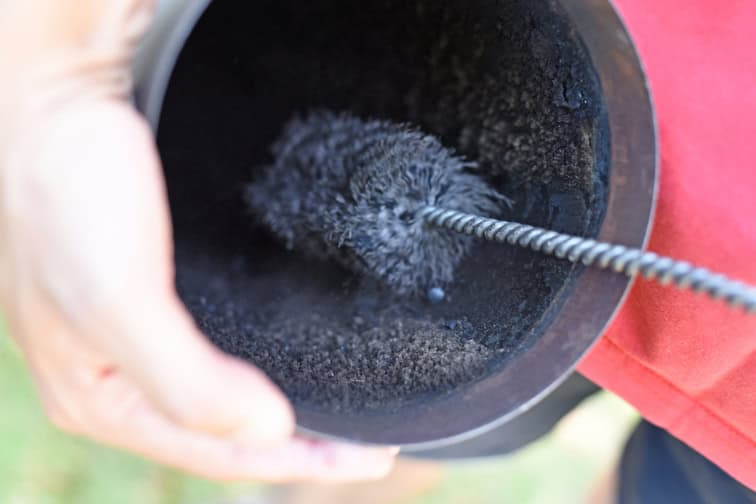
Fourth, if you use your fireplace regularly through the winter, be aware of how much wood you burn and what kind. Wet or unseasoned wood produces far more creosote than dry, seasoned hardwood. Creosote is the flammable byproduct building up inside your flue and serves as the primary cause of chimney fires. You cannot eliminate it entirely, but you can slow its accumulation by burning the right wood.
Fifth, do not ignore water. If you see staining on the ceiling or walls near your chimney, notice rust on your damper, or find moisture inside the firebox after heavy rain, those are signs your chimney’s waterproofing or flashing may have failed. Water damage compounds quickly, and in Rhode Island’s wet winters, a small leak in October can become a significant problem by March.
Want live answers?
Connect with a Certified Chimney Inspections expert for fast, friendly support.
Annual inspections are the standard for good reason. But there are situations where waiting until your next scheduled appointment is the wrong call.
If you’ve had a chimney fire (even a small one you may not have realized was happening), experienced a significant storm that could have shifted or cracked the crown, noticed a sudden change in how your fireplace drafts, or received a notice from National Grid about a venting issue, those are all reasons to pick up the phone immediately.
Rhode Island homeowners who use gas appliances know that National Grid will shut off service when they detect a venting problem. That is not a situation where you wait; it is an urgent repair need, and getting a certified chimney inspection is the first step toward restoring service.
This is one of the most common questions we hear, and the honest answer is yes, even if you rarely use your fireplace.
NFPA 211, the national standard for chimneys and venting systems, recommends annual inspections for all chimney and venting systems, including gas, oil, wood, and pellet. The reasoning isn’t just about creosote buildup from heavy use. It’s about structural integrity, moisture intrusion, and the things that happen to a chimney regardless of the presence of an active fire.
An unused chimney is prone to having an animal nesting in it. Birds, squirrels, and raccoons are drawn to open flues, and a blocked flue is a carbon monoxide hazard the moment you decide to use the fireplace again. In older Providence County neighborhoods and historic Newport homes, this is common, especially in chimneys left unused for years.
Moisture does not care if you’re burning wood. Rain, condensation, and freeze-thaw cycling affect the masonry, the liner, the crown, and the cap regardless of whether the fireplace is active. A chimney sitting unused through several Rhode Island winters can develop significant liner damage that remains invisible from the firebox but is easily spotted by a trained technician with proper equipment.
There is also the home sale question. If you’re planning to sell your home, which is a significant financial event in markets like Barrington, East Greenwich, or South Kingstown, a Level 2 chimney inspection is required before the sale closes. Having annual inspections on record makes that process smoother and removes a potential negotiating point for buyers.
The short version: annual inspections protect your home, your family, and your investment. The fireplace does not need to be in heavy rotation for that to matter.
This is a fair question, and it matters more in the chimney industry than in most home services.
Chimney sweeping is largely unregulated. Anyone can legally set up as a chimney company without formal training, certification, or insurance. That is the reality of how the industry works, and it is why credential verification is important before letting anyone near your chimney.
The credential that counts is CSIA certification, which is the Chimney Safety Institute of America Certified Chimney Sweep designation. It requires passing a comprehensive exam based on NFPA 211 standards and the International Residential Code. Critically, it’s verifiable. You can look up any technician’s certification number on the CSIA website before they arrive at your door.
Here is what most homeowners don’t know to ask: some companies have a CSIA-certified owner but send uncertified employees to do the work. The certification belongs to the owner, while the person on your roof may have had no formal training at all. The right question isn’t “is your company CSIA certified?” Instead, ask if the technicians performing the work are CSIA certified.
At Certified Chimney Inspections, every member of our team holds CSIA certification. Not just the owner. Everyone. That is something we are explicit about because we know it’s not standard across the industry.
Beyond certification, look for a company that provides a written inspection report, carries liability insurance, gives you a clear estimate before any work begins, and does not pressure you into repairs on the spot. A company that hands you a transparent, itemized report and lets you make your own decision is a company worth trusting.
We’ve been working across all five Rhode Island counties since 2000, maintaining the same team, the same standards, and the same approach. That kind of continuity is difficult to fake.
The annual chimney inspection is essential. But what you do in the months between appointments, such as visual checks, paying attention to drafting, and noticing water stains and cracked mortar, helps keep your home safe through a Rhode Island winter.
This state is harder on chimneys than most. The salt air in Bristol and Newport counties, the freeze-thaw cycles in Providence and Kent, and the aging housing stock across Washington County are not abstract concerns. They are the conditions your chimney faces right now, regardless of whether it was inspected last month or three years ago.
If something looks off, or if you’re overdue for a professional chimney inspection, reach out to Certified Chimney Inspections. We offer free estimates, serve all five Rhode Island counties, and bring over two decades of local experience to every job, with every technician on every visit holding CSIA certification.
Continue learning: