Summary:
You haven’t used the fireplace since March. It sat quiet all spring and summer, and now that the temperatures are dropping across Providence County, Kent County, Newport County, Bristol County, and Washington County, you’re ready to light it up again. Seems simple enough. But that quiet stretch isn’t as harmless as it looks. A chimney that’s been idle for months can be just as risky as one that’s been overworked. This post covers three specific warning signs that tell you it’s time for a professional chimney cleaning before you strike that first match, along with what is happening inside your flue when those signs appear.
Here’s what most homeowners don’t realize: the off-season is not a neutral period for your chimney. While you’re not using it, moisture is working its way in, animals are scouting for nesting spots, and any creosote left over from last winter is slowly hardening against the walls of your flue.
Creosote, the oily, tar-like byproduct of burning wood, becomes significantly more difficult to remove the longer it sits. What might have been a straightforward cleaning in April can turn into a much more involved job by October. In coastal areas across Newport County, Bristol County, and Washington County, salt air accelerates corrosion on metal chimney components in ways that don’t show up until you’re already having a problem.
This is the most common misconception we run into. A homeowner hasn’t touched their fireplace since February, so they assume it’s in decent shape. But absence of use doesn’t equal absence of risk; it just means the problems are quieter.
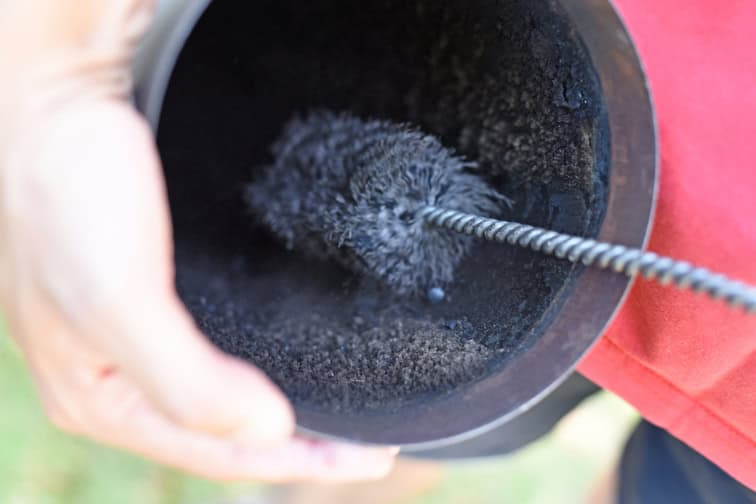
During the warmer months, humidity moves in and out of your flue. That moisture interacts with residual creosote and soot, softening it just enough to shift, and then hardening it again as temperatures drop. By the time fall arrives, what’s left behind is denser and more stubborn than it was in the spring. Stage 2 and Stage 3 creosote, the dangerous forms, don’t look like a light dusting of ash. Stage 3 creosote is essentially a hardened glaze with roughly 85% combustible content coating the interior of your flue.
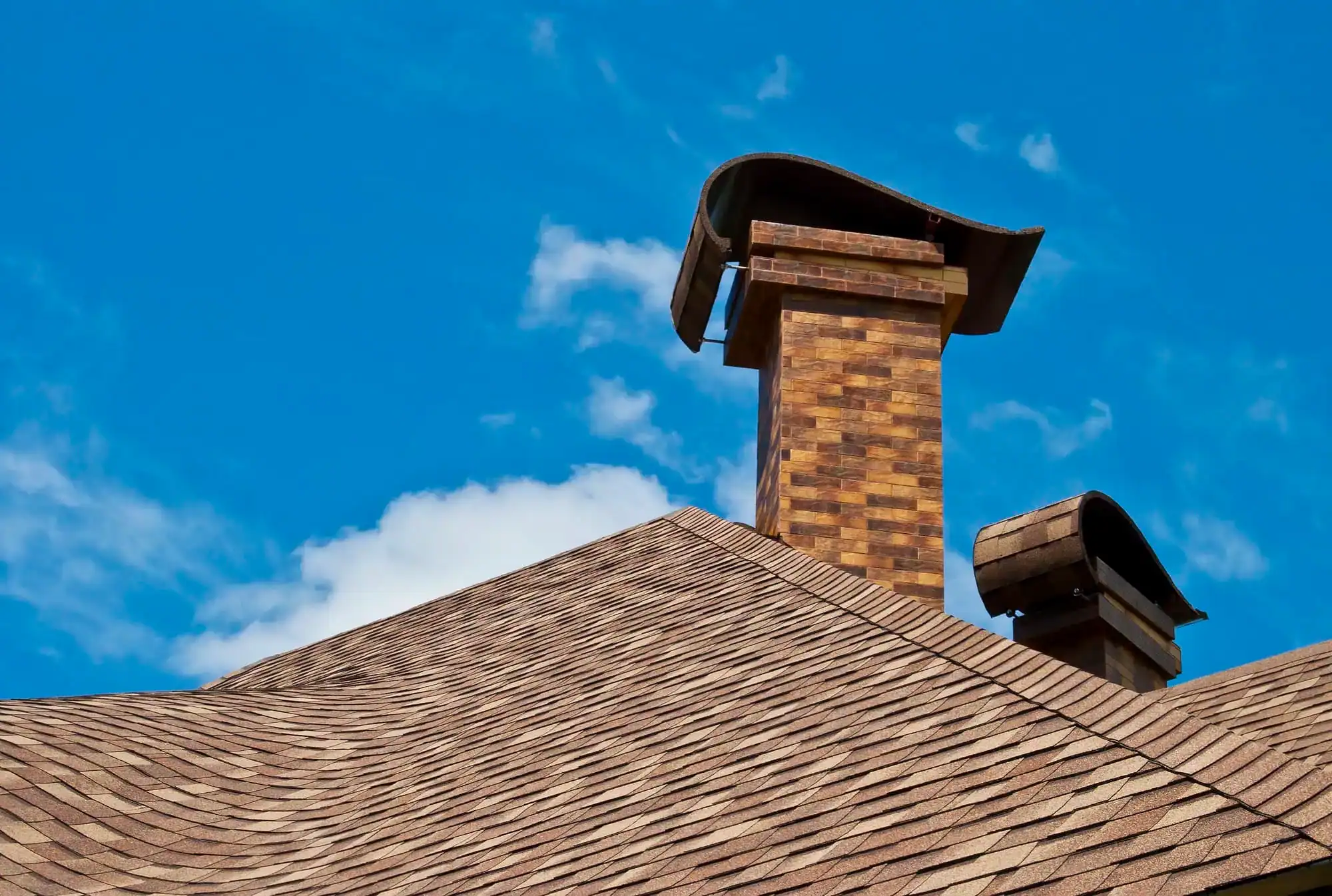
Animals are another factor that gets overlooked. Squirrels, birds, and raccoons treat uncapped or damaged chimneys like prime real estate from April through September. A nest tucked into your flue won’t announce itself: you’ll only find out when you light a fire and smoke starts backing into your living room, or worse, when the nest catches fire.
The NFPA 211 standard, the national standard governing chimneys and fireplaces, requires an annual inspection regardless of how often you use the system. Even if you only burned a handful of fires last winter, that requirement exists because the risks don’t scale down proportionally with usage.
For homeowners in older communities like College Hill in Providence, the historic waterfront neighborhoods of Bristol, or the colonial-era homes throughout Barrington, this matters even more. Original clay tile liners in older homes are more susceptible to cracking from freeze-thaw cycles and thermal stress, and those cracks are completely invisible without a proper inspection.
Most of the dangerous conditions inside a chimney are invisible from your living room. But there are a few signs that do break through, and when they do, they’re worth taking seriously.
The first is a smoky or acrid smell coming from your fireplace when it isn’t in use. This catches people off guard because they expect chimney smells to only happen when there’s a fire burning. A persistent odor, especially during humid summer months or after a rain, is often a sign of Stage 2 or Stage 3 creosote reacting with moisture inside the flue. It’s not a minor annoyance. It’s your chimney telling you there’s significant buildup that needs to come out.
The second is visible black residue or soot falling into the firebox. A small amount of ash is normal. But if you’re seeing black, oily flakes or chunks dropping down into the fireplace, especially when you haven’t had a fire recently, that’s creosote breaking loose. The industry threshold is clear: just 1/8 inch of creosote buildup is enough to fuel a chimney fire. If it’s falling into your firebox on its own, you’re well past that point.
The third sign is restricted airflow or smoke that doesn’t draft properly when you do light a fire. If smoke is spilling into the room instead of drawing up through the flue, something is blocking or restricting the chimney. That could be a debris blockage, an animal nest, collapsed liner material, or heavy creosote buildup narrowing the flue opening. None of those resolve on their own, and none of them are safe to ignore.
For homeowners in Washington County and along the South County coast in Narragansett, South Kingstown, and Westerly, salt air from the ocean adds an extra layer of wear on metal flashing, chimney caps, and liner connections that can accelerate these problems. A chimney that was in reasonable shape last spring may have deteriorated meaningfully by October, particularly if a nor’easter moved through and displaced a cap or cracked a crown.
Chimney fires can reach temperatures over 2,000°F, hot enough to warp stainless steel and crack clay tile liners. When those liners crack, heat and combustion gases can reach the wood framing of your home. That’s not a slow problem; it’s a fast one.
Want live answers?
Connect with a Certified Chimney Inspections expert for fast, friendly support.
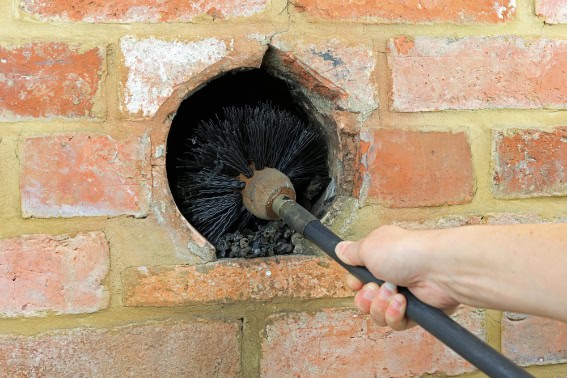
A professional chimney cleaning isn’t just running a brush through the flue and calling it done. When it’s done right, it’s a thorough process that addresses what you can see and, more importantly, what you can’t.
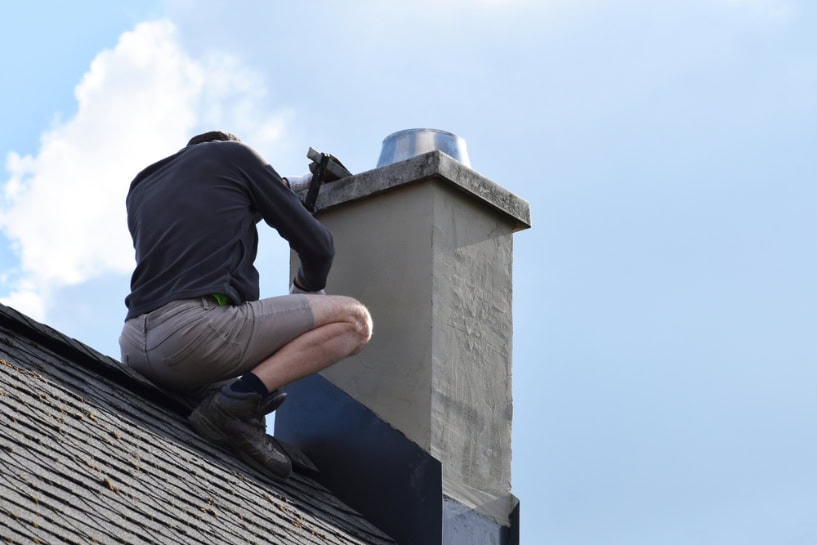
We clear creosote and soot from the firebox, smoke chamber, and flue liner. We inspect the chimney cap, crown, and flashing for damage, check the damper for proper operation, and assess the condition of the liner for cracks or deterioration. Photo documentation is part of how we work: you should be able to see exactly what was found, not just take someone’s word for it.

This is a fair question, and it’s one more Rhode Island homeowners should be asking. The chimney industry has a well-documented problem with low-cost teaser pricing: companies that advertise $35 or $55 cleanings, get in the door, and then push high-pressure repair recommendations or do substandard work that leaves dangerous buildup in place.
The credential that matters most is CSIA certification from the Chimney Safety Institute of America. CSIA has been the primary independent certification body for chimney professionals since 1983. Getting certified means a technician has been tested on chimney construction, venting systems, fire safety standards, and applicable codes including NFPA 211. It’s not an in-house training certificate; it’s an independent credential.
At Certified Chimney Inspections, every technician on our team holds individual CSIA certification (not just the company, not just the owner, but every person we send to your home). That distinction matters more than it might seem. A company can list “CSIA certified” as a credential while only having one or two certified staff members. When you call us, whoever shows up has been personally tested and credentialed.
We’ve been doing this work with the same core team since 2000. That’s over two decades of experience with Rhode Island’s specific housing stock: the older masonry chimneys in Providence and Cranston, the historic properties in Newport and Middletown, and the coastal homes in East Greenwich and Narragansett that face accelerated wear from salt air and harsh winters. We know what these chimneys look like when they’re healthy and what they look like when they’re not.
Our technicians document findings with photographs during every visit. You won’t be handed a vague verbal report and told you need expensive repairs. You’ll see what we saw, in detail, and we’ll explain what it means in plain language. If repairs are needed, we offer in-house financing so cost doesn’t become a reason to leave something unsafe unaddressed. If you’re not sure where to start, a free estimate is available with no obligation and no pressure.
The straightforward answer is once a year, minimum. That’s what NFPA 211 calls for, and it applies regardless of how frequently you use your fireplace or stove. Annual inspection is the baseline, not a recommendation for heavy users only.
In Rhode Island specifically, there are good reasons to take that requirement seriously rather than stretch it. The state’s winters run hard from November through March, and heating bills here are among the highest in the country. A chimney that isn’t drawing efficiently forces your heating system to work harder, and a fireplace you’re relying on for supplemental warmth needs to be in reliable shape.
The freeze-thaw cycles that affect inland areas like western Kent County and Providence County are brutal on mortar joints and chimney crowns. Water gets in, freezes, expands, and opens up cracks that weren’t there the previous spring.
If you’ve recently purchased a home in Rhode Island, a Level 2 inspection is required under NFPA 211 at any change of property ownership: not optional, and not just recommended. Real estate transactions in Newport County, Bristol County, and throughout Providence County happen year-round, and many new homeowners have no idea when the chimney was last serviced. Getting that inspection done before the first fire isn’t overcautious; it’s the baseline.
There’s also a Rhode Island-specific scenario worth knowing about: National Grid, the primary gas utility serving the state, can shut down a gas appliance when they identify a venting or chimney issue during a service call. When that happens, you need a certified inspection and documented repair to restore service. It’s a time-sensitive situation that catches homeowners off guard. We handle National Grid shutdown resolutions specifically, and with 24/7 availability, we can respond when the urgency is real.
If you burn wood regularly, even a few fires a week through the winter, the NFPA recommends cleaning more frequently than once a year. The rate of creosote accumulation depends on the type of wood you’re burning, how hot your fires run, and how well your chimney drafts. Wet or unseasoned wood produces significantly more creosote than properly dried hardwood. If you’re not sure what category you fall into, an annual inspection will tell you where you stand and if more frequent service makes sense for your specific setup.
The warning signs are real, and the stakes are high enough that they’re worth acting on before you light your next fire. A smoky smell when the fireplace is cold, black residue dropping into the firebox, or smoke that won’t draft properly are all reasons to pick up the phone before the heating season gets underway. Rhode Island’s winters don’t ease in gradually, and once November arrives across Bristol County, Kent County, Newport County, Providence County, and Washington County, you want your chimney ready rather than scrambling after the first cold snap. Certified Chimney Inspections has been serving every corner of Rhode Island with the same team and standards since 2000, so contact our CSIA-certified team today to schedule your free estimate and ensure your fireplace is completely safe this season.
Continue learning: