Summary:
You noticed something, like a smell, a little smoke backing into the room, a crack you hadn’t seen before, or maybe just the realization that it’s been years since anyone looked at your chimney. Now you’re unsure what to do next. Do you need a cleaning? A repair? Both? It’s a confusing question, and most people don’t know the answer until someone climbs up and takes a look. This guide breaks it down plainly, so you can go into that first conversation informed rather than guessing.
These two services get used interchangeably, but they’re not the same thing. A chimney cleaning, sometimes called a chimney sweep, removes what’s built up inside the flue: soot, creosote, debris, and the occasional bird nest. It’s maintenance. It keeps the system functioning the way it should and reduces the risk of a chimney fire caused by flammable buildup.
Chimney repair is something different. It addresses damage, such as cracked mortar joints, a deteriorating flue liner, a broken crown, failed flashing, or spalling bricks that let water in. Repair work restores the structural integrity of the chimney. You can’t sweep your way out of a cracked liner, and you don’t need a full masonry restoration just because your flue hasn’t been cleaned in a few years.
The reason this matters is that getting the diagnosis wrong costs you. Either you delay a real safety issue, or you spend money on repairs you didn’t need yet.

The clearest sign is frequency of use. If you’ve been burning wood regularly and it’s been more than a year since your last sweep, a cleaning is almost certainly overdue. The Chimney Safety Institute of America recommends cleaning when there’s an eighth of an inch of sooty buildup visible inside the flue, and immediately if you can see any glaze, which is a sign of glazed creosote and the most flammable kind. NFPA Standard 211 goes further, requiring annual inspection of every chimney, even ones you rarely use, because animals can nest in an idle flue and deterioration happens regardless of whether you’re burning fires.
Practically speaking, the signs pointing toward cleaning rather than repair include a noticeable smoky smell when the fireplace isn’t in use, reduced draft when you do have a fire going, visible soot around the firebox opening, or simply a long gap since the last service call. None of these automatically mean something is broken, as they often just mean the system is dirty and airflow is restricted.
Here’s something worth understanding about Rhode Island specifically: the maritime humidity across all five counties, from Narragansett and Westerly in Washington County up through Providence and into Bristol County, keeps creosote deposits damp. That makes them thicker, stickier, and more dangerous than the same buildup in a drier climate. A chimney that might be fine after two seasons in a landlocked state can be a real fire risk after one season near the coast. Annual cleaning isn’t overcautious here; it’s appropriate for the conditions.
One more thing: a cleaning often reveals if repairs are needed. When we sweep the flue and can see clearly, we get a much better picture of what’s going on structurally. That’s why a good inspection process starts with cleaning first, not the other way around.
Some problems are visible from the ground, including missing mortar between bricks, a cracked chimney crown, or bricks flaking and breaking apart. Those are signs of structural deterioration, and they don’t go away with a cleaning. But many of the most serious chimney repair issues are invisible until someone gets up on the roof and looks inside.
A cracked flue liner is one of the most common and dangerous problems. The liner is what contains combustion gases and directs them safely out of your home. When it cracks, which happens regularly in Rhode Island because of the freeze-thaw cycles hitting every winter, those gases, including carbon monoxide, can migrate into living spaces. You won’t see it from the street. You won’t smell it until it’s already a problem.
Chimney flashing is another frequent repair need across the state. The flashing seals the joint where your chimney meets the roof. In coastal communities like Newport, Narragansett, and Barrington, salt air accelerates metal corrosion. Galvanized steel flashing in those areas can fail in as little as ten to fifteen years. When it goes, water gets in, and water damage to a chimney compounds quickly. What starts as a flashing issue becomes a mortar problem and eventually a liner problem if left alone.
If you’ve received a notice from National Grid about your gas appliance, that’s another clear signal that repair, not just cleaning, is needed. National Grid has authority to shut off gas service when chimney deficiencies are identified during a utility inspection, and restoring service requires a certified chimney professional to diagnose and correct the specific issue. This is a Rhode Island reality that homeowners in Providence County and Kent County run into more often than they expect, and it’s not something a basic cleaning resolves.
Other repair indicators include white staining (efflorescence) on the exterior brick, water stains on the ceiling near the chimney, a damper that won’t seal properly, or a firebox showing signs of cracking or deterioration. Any of these warrant a professional inspection, moving beyond a simple cleaning appointment.
Want live answers?
Connect with a Certified Chimney Inspections expert for fast, friendly support.
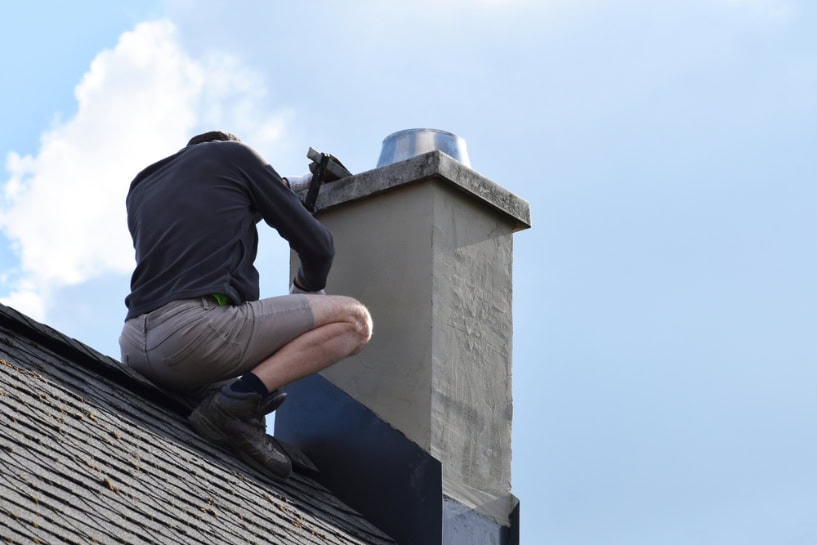
This is where a lot of homeowners get tripped up. They assume any company showing up and looking at the chimney has done an inspection. That’s not always the case. A ground-level visual isn’t an inspection; it’s a guess. A real inspection involves getting up on the roof, looking into the flue, and assessing the system based on what’s there, not what can be seen from the driveway.
NFPA 211 defines three levels of chimney inspection. A Level 1 is the standard annual inspection, covering accessible areas of the chimney and remaining appropriate when nothing has changed with the system. A Level 2 is required when you’re buying or selling a home, changing fuel types, or when there’s been a fire or significant weather event. Level 3 involves more invasive investigation when there’s a suspected structural problem that can’t be assessed otherwise.

This is a valid concern, and it’s worth addressing directly. The chimney industry has a documented problem with low-price sweep offers, sometimes as low as $49, that turn into aggressive upsells for expensive repairs the homeowner has no way to verify as necessary. It happens often enough that consumer protection agencies have written about it.
The way to protect yourself is straightforward. First, work with a company whose technicians are CSIA certified, including the people doing the actual work, not just the owner. CSIA certification requires passing rigorous exams and ongoing continuing education. It’s a verifiable credential, not a marketing claim. Second, insist on an estimate involving an on-site inspection before any work is agreed to. If a company quotes you for repairs over the phone or from the ground, that’s a red flag.
Third, ask for a clear explanation of what was found and why it needs addressing. A trustworthy technician will show you what they’re seeing through photos, documentation, and a plain-language explanation, rather than just handing you a repair quote. If you feel pressured or can’t get a straight answer about what’s wrong and why, that’s your signal to call someone else.
The sequential relationship between cleaning and repair matters here too. A responsible technician sweeps the flue first, then inspects it clearly. Recommending significant repairs before a cleaning has been done, and before the technician can see what’s in the flue, is a process problem. It doesn’t mean every repair recommendation is dishonest, but it’s worth asking why the sequence is out of order.
Every one of our technicians at Certified Chimney Inspections is CSIA certified. When we come out for a free estimate, we climb up and inspect your chimney rather than looking at it from the ground and guessing. That process exists because it’s the only honest way to tell you what you need.
Yes, meaningfully. Rhode Island’s combination of coastal salt air, persistent maritime humidity, and hard winters creates conditions for aging chimneys faster than most homeowners realize. This is true across all five counties, but the intensity varies by location.
In Newport County and Bristol County communities like Newport, Middletown, Tiverton, Barrington, and Bristol, salt air is a constant. It works into mortar joints and softens them over time, after which freeze-thaw cycles do the cracking. The result is that a coastal chimney can deteriorate roughly twice as fast as the same chimney twenty miles inland. If you’re in one of the older homes defining these communities, such as a Federal Hill brownstone in Providence, a Gilded Age property in Newport, or a colonial-era home in East Greenwich or Barrington, you may be dealing with original masonry that has never had a proper liner installed. Those chimneys need more than annual cleaning, requiring a professional eye on them every year.
In Washington County, often called South County by residents, the challenge is compounded by seasonal vacancy. Homeowners in Narragansett, Westerly, and Charlestown who use properties part-time may not have had a chimney inspection in years. A chimney sitting idle through multiple winters, potentially with animal nesting in the flue and moisture working through deteriorating mortar, differs from a well-maintained chimney in a year-round residence. It needs assessment before use, not after.
Kent County homeowners in Warwick, Coventry, and East Greenwich deal with the freeze-thaw problem acutely, as the interior geography of the state doesn’t protect these chimneys from hard winters, and the housing stock includes mid-century homes where maintenance has been inconsistent. Providence County, featuring the densest concentration of older housing in the state, has the highest proportion of chimneys built as primary heating systems that have been retrofitted, modified, or aged without proper upkeep.
The short answer is that Rhode Island’s climate means annual inspection is necessary, and the specific repairs your chimney needs depend heavily on your location in the state and what your chimney has experienced. We understand these conditions, moving beyond general chimney work to give you an accurate diagnosis.
If you’re not certain if you need a cleaning, a repair, or both, that’s normal, and it’s why a proper inspection exists. The goal isn’t to sell you the most expensive service. It’s to tell you what’s going on so you can make a decision making sense for your home and budget. Small problems caught early are almost always cheaper to fix than the same problems left alone for another season.
What matters most is working with someone who will give you a straight answer based on what they find, rather than what they assume from the driveway. In-house financing is available if a repair turns out to be needed and timing is a concern. There’s no pressure to commit to anything before you understand what you’re looking at.
If your chimney is overdue for a look, or if you’ve noticed something that doesn’t seem right, reach out to Certified Chimney Inspections. We’ll come out, climb up, and tell you what we see.
Continue learning: