Most homeowners wait for something to go wrong. A growing number across Rhode Island are choosing not to wait, and it's making a real difference in how their homes perform all winter.
Summary:
Something has shifted among Rhode Island homeowners in the last few years. Instead of waiting for a chimney problem to force their hand, such as a cracked liner, a failed inspection during a home sale, or a National Grid shutdown, more people are making deliberate decisions about their chimney systems before anything goes wrong. They’re installing new stoves. They’re upgrading old flues. They’re scheduling inspections because they want to, not because they have to. If you own a home in Providence, Newport, Bristol, Kent, or Washington County and you’ve been thinking about your fireplace or heating setup, this is worth reading.
Rhode Island has the third-oldest owner-occupied housing stock in the nation. The median age of a home here is 59 years, meaning most chimneys across Bristol, Kent, Newport, Providence, and Washington County were built before modern flue liner standards, clearance requirements, and appliance-specific sizing guidelines ever existed.
When a homeowner in Warwick decides they want a wood stove, or a family in Bristol wants to add a pellet insert to their living room, the first question isn’t always “which stove do I like?” It’s often “does my existing chimney support what I want to do?” The answer, in a lot of these homes, is not without some upgrades. That’s where chimney installation becomes less about new construction and more about making your home work the way you want it to.

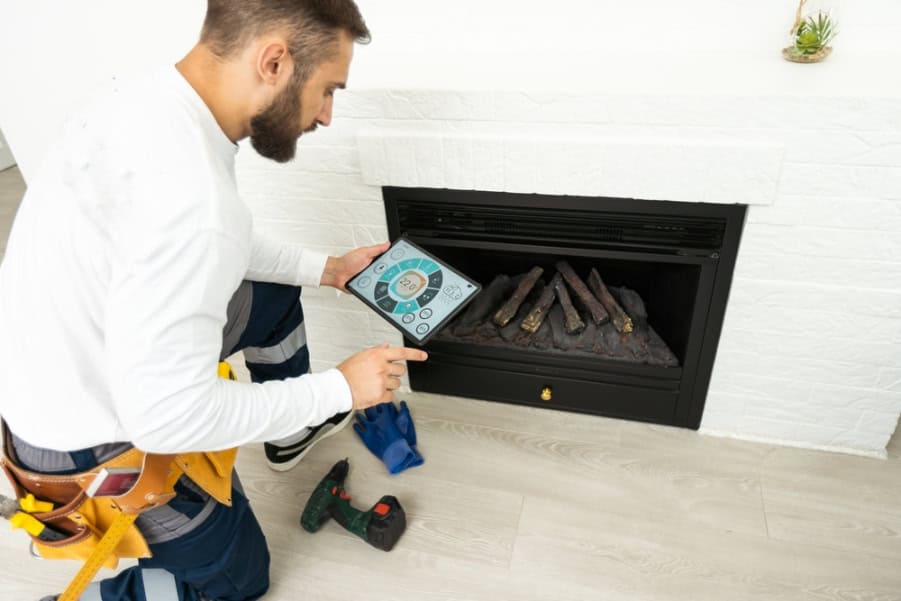
The term “chimney installation” covers more ground than most people realize. For some homeowners, it means adding a stove insert into an existing masonry fireplace, like a wood-burning insert in a colonial on College Hill in Providence, or a gas insert in a historic home in Bristol that hasn’t had a working fireplace in decades. For others, it means installing a brand-new prefabricated chimney system where none existed before, or relining a deteriorated flue so it can safely vent a new appliance.
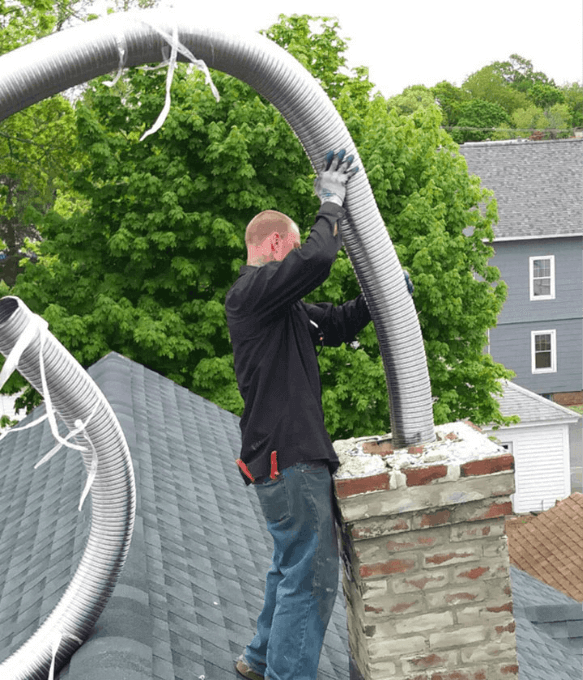
Liner installation is one of the most common projects we handle across all five Rhode Island counties. Clay tile liners, which were standard in homes built before the 1980s, crack over time, especially in climates experiencing the kind of freeze-thaw cycling Rhode Island encounters every winter. Once a liner is compromised, it can no longer safely contain combustion gases, meaning your fireplace or stove vents into the surrounding masonry rather than up and out. That creates a carbon monoxide risk, not just a code issue.
The process starts with a thorough inspection, typically a Level 2 inspection that includes a video scan of the flue interior. That gives us a clear picture of what the liner looks like, if the dimensions are right for the appliance you want to use, and what the chimney structure looks like from the inside. From there, we can give you a straight answer about what the installation requires, what it will cost, and what the finished system will look like.
For homeowners in Newport County and along the Washington County coastline, there’s an added layer to consider: salt air. Narragansett Bay’s tidal humidity and Rhode Island’s 400 miles of coastline accelerate corrosion on metal chimney components in ways that inland markets simply don’t experience. Caps, liners, flashing, and dampers all take a harder hit here than they would in a landlocked state. When we’re assessing a chimney in Narragansett or Middletown, that coastal exposure is always part of the conversation.
Rhode Island consistently ranks among the highest-cost states for home energy. Monthly heating bills here average $189, standing as one of the highest figures in the country. That number alone has pushed a lot of homeowners in Kent County and Washington County toward supplemental heating, and stove installation is one of the most popular ways to get there.
Wood stoves remain popular in rural areas of Washington County and the northern reaches of Providence County, where the Blackstone Valley’s older housing stock has been running on wood heat for generations. Pellet stoves have gained significant ground in recent years because they’re cleaner, easier to regulate, and qualify for the federal Section 25C tax credit, which covers 30% of qualifying stove and installation costs up to $2,000 annually through 2032.
Gas fireplace installations are common in Newport County and Bristol County, where homeowners often want the ambiance and supplemental heat without the logistics of storing and managing wood. A gas insert in an existing masonry fireplace is one of the cleaner installations we do, being efficient, low-maintenance, and well-suited to the historic homes defining the architecture in Bristol, Barrington, and Newport.
One thing we’ve found after more than two decades doing this work is that homeowners make better decisions when they can see and compare their options before committing. That’s part of why we operate a retail stove store, allowing you to walk in, look at real units side by side, and make a choice based on something more than a photo on a website.
Want live answers?
Connect with a Certified Chimney Inspections expert for fast, friendly support.
Installing a new system is one side of the proactive approach. The other side is maintaining what you already have and doing it on a schedule, rather than in response to a problem. NFPA 211, the national standard governing chimneys and fireplaces, requires that chimneys be inspected at least once a year. That’s not a recommendation from a chimney company trying to drum up business. It’s a codified standard that also happens to be a condition of coverage under many homeowner insurance policies.
The homeowners who call us after a problem, such as a chimney fire, a National Grid shutdown, or a failed inspection during a home sale, almost always wish they’d called sooner. Annual chimney cleaning and inspection isn’t a luxury. It’s the baseline for operating a fireplace or stove safely.
A standard annual inspection, which NFPA 211 classifies as a Level 1, covers all accessible portions of the chimney exterior, interior, and the connection to your appliance. We check for visible deterioration, blockages, creosote buildup, and anything suggesting the system isn’t venting the way it should. For wood-burning systems, the CSIA recommends cleaning when creosote buildup reaches 1/8 inch, and in a home burning wood regularly through a Rhode Island winter, that threshold can be reached in a single season.
A Level 2 inspection goes further. It’s required when you’re buying or selling a home, after a chimney fire, or when you’re making changes to the system, like adding a new stove or switching fuel types. Level 2 includes a video scan of the flue interior, which is the reliable way to see what’s happening inside a liner in place for 40 or 50 years. In Providence County’s older neighborhoods, such as Federal Hill, College Hill, and the triple-deckers of Pawtucket and Woonsocket, that thorough look is often the first time anyone has assessed the chimney since the house was built.
Every technician on our team is CSIA-certified through the Chimney Safety Institute of America, the sole national certifying body for chimney professionals in the U.S. It’s not a credential held by just one person on staff. It’s a standard we hold across the board. When you schedule with us, you know the person walking through your door has passed a rigorous exam on NFPA 211 standards and can back that up with a verifiable credential.
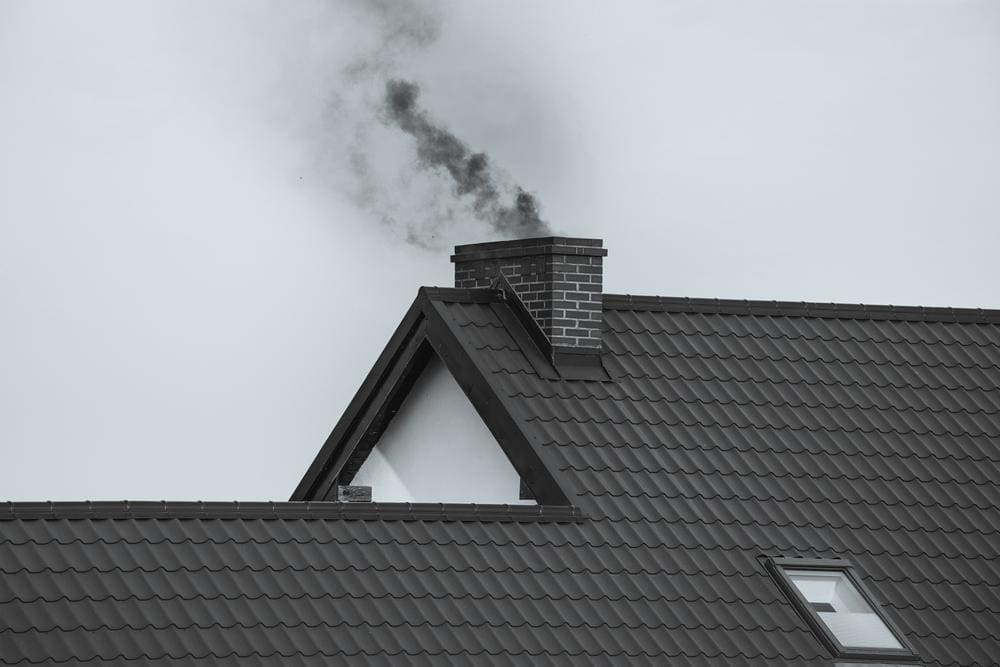
Chimney cleaning is straightforward but important. Creosote, the byproduct of incomplete combustion, accumulates on flue walls and serves as the primary fuel source for chimney fires. Regular cleaning removes that buildup before it becomes a hazard. It also gives us a clear view of the liner and masonry, meaning we catch small problems before they become expensive ones.
Not every chimney issue is a reason to panic, and not every problem requires a full replacement. Chimney repair covers a wide range of work, including broken crowns, worn mortar joints, deteriorated flashing, cracked or failed liners, and structural damage from water infiltration or freeze-thaw cycling. In most cases, targeted repair is the right answer, and it’s significantly less expensive than starting over.
Tuckpointing is one of the most common repairs we do in Providence County and Kent County, where the combination of age and New England winters takes a predictable toll on mortar joints. When water gets into those joints, freezes, and expands, the masonry fractures. Left unaddressed, that damage works its way deeper into the structure over time. Catching it early through annual inspection is almost always the more economical path.
Fireplace restoration is a different conversation. Some of the homes we work on in Newport County and Bristol County feature fireplaces that haven’t functioned in years or decades. The masonry is sound, the character is irreplaceable, but the system was never properly maintained or was modified at some point in a way that compromised its function. Restoration brings those fireplaces back to working condition without sacrificing the original character of the hearth.
Chimney leak repair is another area where proactive care pays off. Water is the most consistent source of long-term chimney damage. A compromised crown, missing cap, or failed flashing allows water to enter the system and work its way into the surrounding masonry. In a coastal market like Newport or Washington County, where moisture exposure is elevated year-round, that deterioration happens faster than it would inland. Waterproofing and flashing repair, done before a leak develops, is far less disruptive than addressing damage after water has found its way in.
We offer free estimates on repair work, so there’s no cost to finding out what your chimney needs and what it will take to address it. If the project is larger than expected, in-house financing is available, ensuring a chimney repair or installation doesn’t have to wait until the timing is perfect.
The chimney industry has a well-documented trust problem. Low advertised prices followed by aggressive upsells, technicians without verifiable credentials, and contractors taking installation jobs without pulling permits are patterns common enough that most buyer guides lead with warnings about them.
Certified Chimney Inspections was founded by people who worked inside that kind of company and decided there was a better way to do it. We’ve been doing this work with the same team since 2000. That’s more than two decades of learning how Rhode Island chimneys age, how coastal conditions affect metal components, how freeze-thaw cycling damages masonry, and how to give homeowners a straight answer about what their system requires.
If you’re in Bristol, Kent, Newport, Providence, or Washington County and you’re ready to think about your chimney proactively, with options ranging from a new installation to a long-overdue inspection or a repair you’ve been putting off, reach out to Certified Chimney Inspections. The first estimate is free, and the conversation won’t cost you anything.
Continue learning: