Summary:
You noticed water stains near the fireplace. Maybe the firebox was damp after a storm, or you spotted crumbling brick and weren’t sure how worried to be. Whatever brought you here, the instinct to get it handled before it gets worse is the right one.
What most Rhode Island homeowners don’t realize is that chimney leak repair and chimney waterproofing aren’t the same thing — and doing one without the other often means the problem comes back. We’ll explain how they work together, what each one actually does, and why that distinction matters especially if you own a home in Rhode Island.
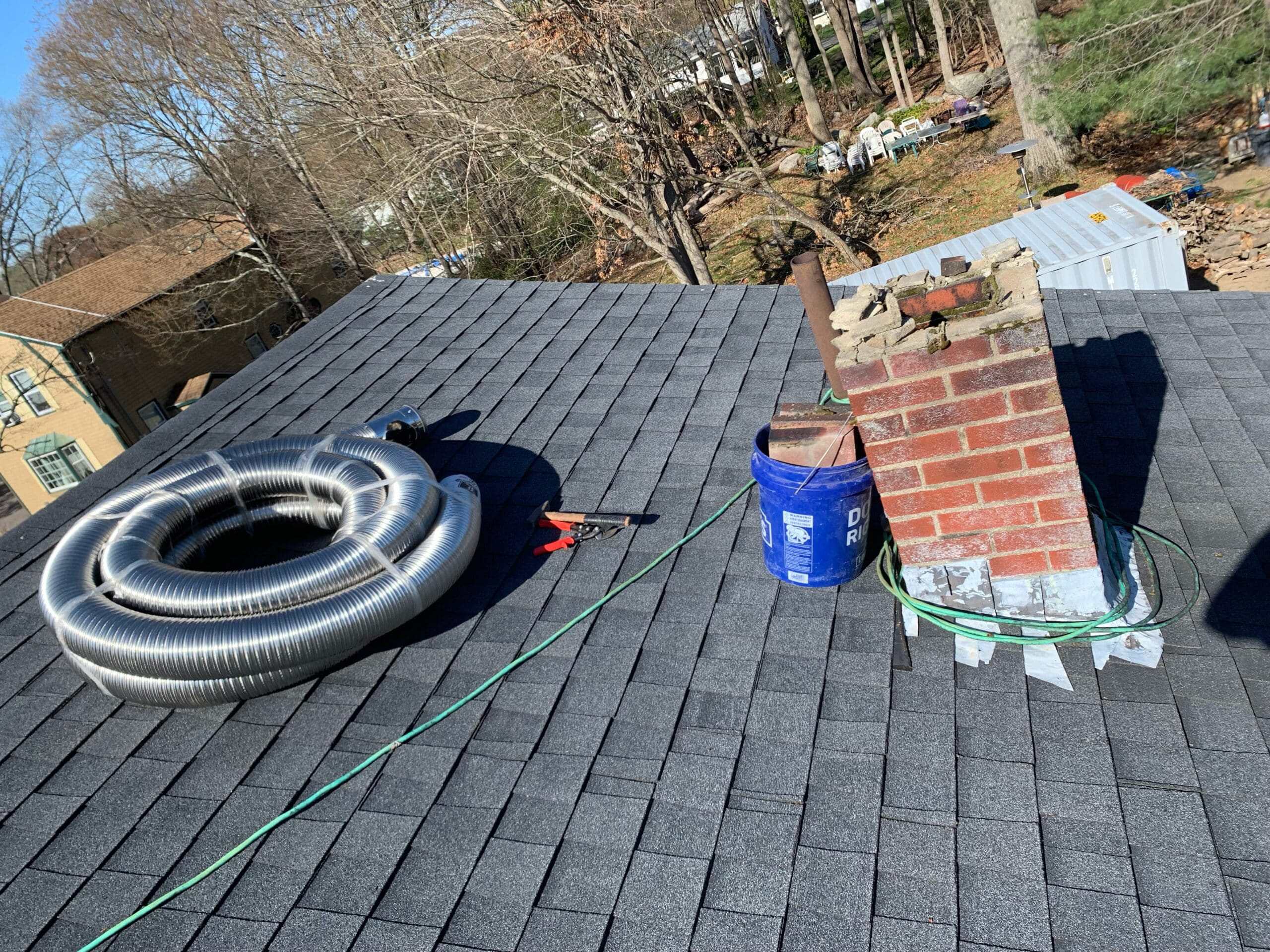
Chimney leak repair addresses existing structural damage — the things that are actively letting water into your home right now. That might be a cracked crown, deteriorated flashing, a missing cap, eroded mortar joints, or spalling bricks. Each of those is a distinct problem with a distinct fix, and a thorough inspection is the only way to know which ones apply to your chimney.
The mistake that leads to repeat leaks is treating only the most obvious symptom. A homeowner notices a water stain and a roofer patches the flashing — but the crown is also cracked, and the masonry has been absorbing water for years. The stain goes away temporarily, and then it’s back the following spring. That’s not bad luck. It’s an incomplete repair.
Water rarely enters a chimney through one neat, obvious point. More often, it’s coming in through two or three places at once, and the stain you see on the ceiling may have traveled several feet from where the moisture actually entered. That’s part of why chimney leaks are so frequently misdiagnosed.
The chimney cap is the first place to look. It sits at the very top of the flue and covers the opening — without one, rain falls directly into the chimney every time it storms. A damaged or missing cap is one of the most straightforward problems to fix, and one of the most consequential to ignore.
In coastal Rhode Island areas near Narragansett Bay, galvanized steel caps corrode significantly faster than stainless steel or copper. Material selection matters here more than it does in drier inland markets, which is why we always recommend stainless steel or copper for homes in Newport County, Washington County, and other coastal zones.
The chimney crown is the concrete or mortar slab that seals the top of the chimney around the flue liner. It’s designed to direct water away from the masonry, but it’s also one of the first components to crack under Rhode Island’s freeze-thaw conditions. When water gets into a hairline crack and freezes, it expands by roughly nine percent — which widens the crack, lets in more water, and repeats the cycle every time temperatures swing above and below freezing. A single Rhode Island winter can put a chimney through dozens of those cycles.
Flashing is the metal seal between the chimney and the roof, and it’s the most commonly misrepaired component in the industry. Proper flashing involves counter flashing — which is embedded directly into the masonry — and step flashing, which is layered into the roof shingles. When a roofer patches a leak with roofing tar or caulk instead of addressing the flashing itself, that fix typically holds for one season before failing again. It’s not a permanent repair; it’s a temporary cover.
Finally, the masonry itself — the brick and mortar — is porous by nature. Even a chimney with no visible cracks absorbs water with every rain event. Over time, that absorption leads to efflorescence (the white mineral staining you sometimes see on brick), spalling, and mortar joint deterioration. This is where waterproofing enters the picture, but more on that in a moment.
This is one of the most common questions we hear, and it’s a fair one — chimney leaks often show up near the roofline, and the flashing sits at the intersection of both trades. The honest answer is that it depends on what’s actually causing the leak.
A roofer can replace or repair flashing, and if the flashing is the sole source of the problem, that may be sufficient. But chimney leaks frequently originate from multiple components — the crown, the cap, the masonry, the mortar joints — and a roofer isn’t trained to diagnose or repair those. If you call a roofing contractor for a chimney leak and they fix the flashing without inspecting the crown and cap, you may get a year of relief before the water finds another way in.
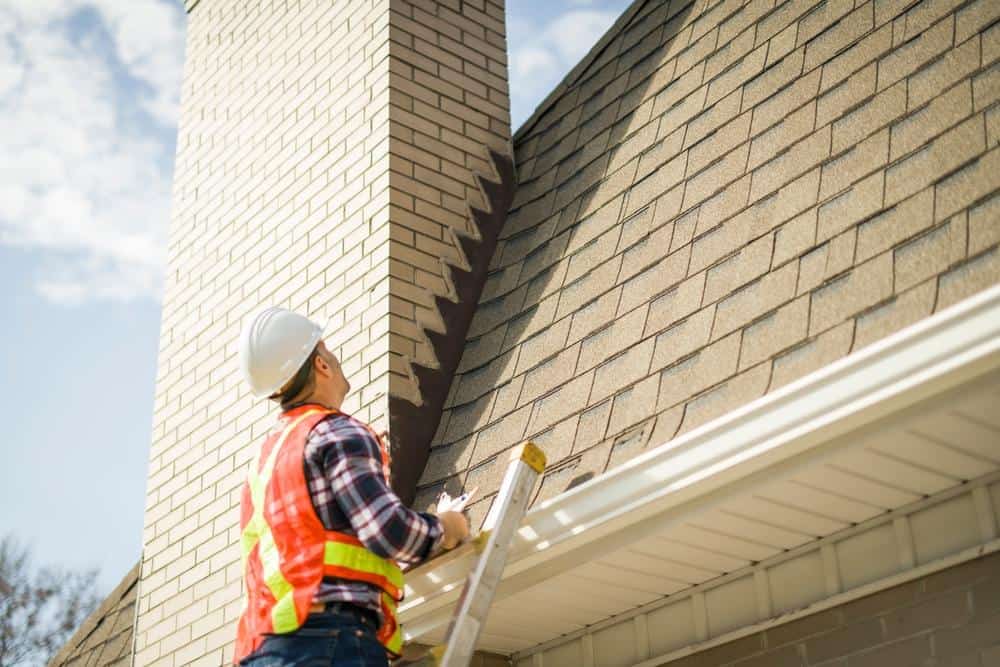
A CSIA-certified chimney technician — CSIA stands for Chimney Safety Institute of America, the only nationally recognized certification body for chimney professionals in the U.S. — is trained specifically to evaluate the entire chimney system. That means assessing every potential entry point before recommending any repair work. It’s a more complete diagnostic process, and it’s why the repairs tend to hold.
Our team at Certified Chimney Inspections has been doing this work with the same group of people since 2000. That’s more than two decades of Rhode Island winters, nor’easters, and coastal storm exposure — and the diagnostic experience that comes from having seen what this specific climate does to chimneys over time. We hold CSIA certification, which means our technicians meet the industry’s highest professional standard, and we approach every chimney leak the same way: find all the sources first, then repair them properly.
Want live answers?
Connect with a Certified Chimney Inspections expert for fast, friendly support.
Once the structural damage is repaired, waterproofing is what keeps moisture from starting the cycle over again. It’s a treatment applied to the exterior masonry surface — brick and mortar — that prevents water absorption while still allowing the masonry to breathe.
That last part matters more than most people realize. The wrong sealant can actually make things worse.

Not all chimney waterproofing products are the same, and using the wrong one is a mistake that’s hard to undo. Film-forming sealants — things like standard paint, tar, or generic masonry coatings — create a surface barrier that blocks moisture from getting in, but they also trap moisture that’s already inside the masonry. When temperatures drop and that trapped moisture freezes, it expands, and the result is accelerated spalling and cracking — exactly the damage the sealant was supposed to prevent.
Industry-standard chimney waterproofing uses vapor-permeable sealants, sometimes called breathable sealants. These products repel water from the outside while still allowing moisture vapor already inside the masonry to escape. The masonry stays dry without being sealed in a way that causes internal pressure during freeze-thaw cycles. For a Rhode Island chimney that’s already absorbed decades of moisture, this distinction is significant.
It’s also worth noting that waterproofing should always come after repair — not before, and not instead of. Applying a sealant over cracked mortar or a damaged crown doesn’t fix those problems; it seals them in. The correct sequence is to complete all necessary structural repairs first, confirm the masonry is in sound condition, and then apply waterproofing as a protective layer. Doing it in the right order is what makes the treatment last.
Rhode Island’s climate makes this especially relevant. The state receives approximately 50 inches of rain annually — about 32 percent more than the national average of 38 inches. Add in the freeze-thaw cycling that comes with New England winters, the salt air exposure for homes near Narragansett Bay and the south coast, and the nor’easters that drive wind and rain into every joint and seam, and you have one of the more demanding environments for masonry in the country. Waterproofing isn’t a luxury add-on in this climate. It’s a practical response to conditions that will keep working on your chimney whether you address them or not.
A properly applied masonry waterproofing treatment, using a quality vapor-permeable product on a chimney that has been fully repaired beforehand, typically lasts several years before it needs to be reapplied. The exact timeline depends on the severity of weather exposure, the condition of the masonry, and whether the chimney has been maintained in the interim.
A chimney near the coast in Newport County or Washington County — where salt air and storm exposure are higher — may need attention sooner than one in a more sheltered location inland.
Spring tends to be the most practical time for both chimney leak repair and waterproofing. The heating season is over, so the chimney isn’t in active use. Spring rains also have a way of revealing damage that accumulated over the winter but wasn’t obvious until the snow melted and the temperatures rose. If you’re noticing water stains, efflorescence, or damp spots near the fireplace in March or April, that’s the winter’s damage making itself known.
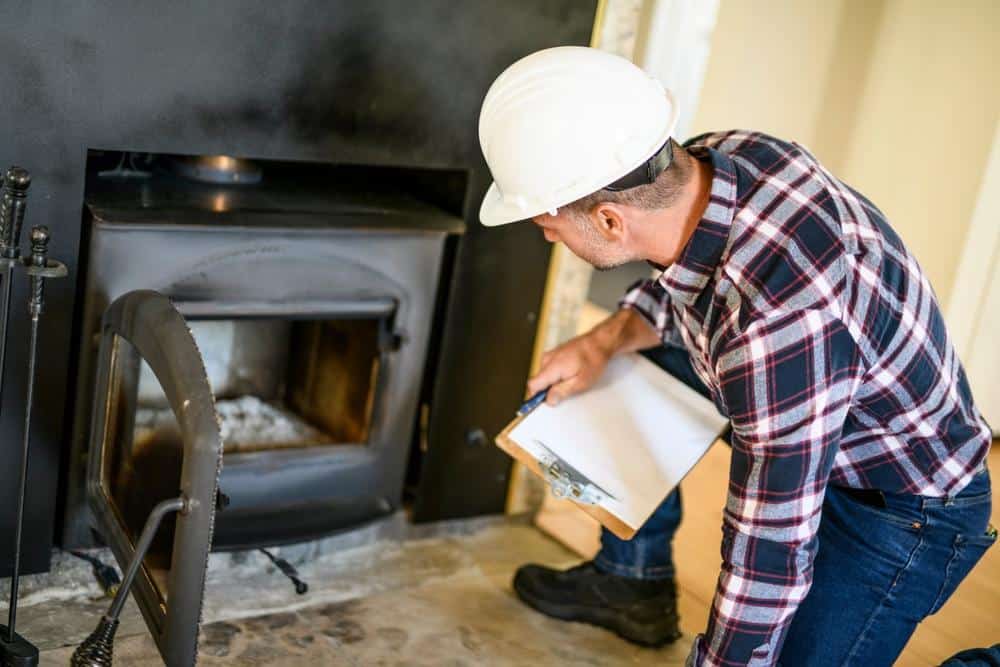
One thing worth keeping in mind: a chimney that isn’t visibly leaking isn’t necessarily in good shape. The median Rhode Island home was built in 1961, which means most chimneys in the state are over 60 years old. Original masonry that has never been waterproofed has been absorbing water for decades. The damage from that absorption is often well underway before any visible symptoms appear. An annual inspection — which the NFPA recommends for all chimneys — gives you a current picture of where things stand, and it’s the most reliable way to catch problems before they escalate.
We offer free estimates, so getting a professional assessment of your chimney’s condition doesn’t require a financial commitment upfront. If you’ve been putting off a chimney inspection, we can tell you exactly what’s going on, what needs to be done, and what the options are.
Chimney leak repair fixes what’s already broken, and waterproofing protects the masonry from absorbing water going forward. You need both, done in the right order, to actually solve the problem rather than delay it.
Rhode Island’s combination of heavy annual rainfall, freeze-thaw winters, coastal salt air, and aging housing stock makes this more than routine maintenance. It’s a practical response to conditions that are genuinely hard on chimneys, and the cost of addressing them early is a fraction of what deferred damage eventually requires.
If you’re dealing with a chimney leak — or if you’re not sure whether your chimney has been properly waterproofed — we’re here to help. Our CSIA-certified team at Certified Chimney Inspections has been working in Rhode Island for over two decades, and we’re glad to take a look and give you a straight answer about what your chimney actually needs.
Continue learning: