Own an older Rhode Island home with a fireplace you're nervous to light? Here are straight answers on restoration, inspections, caps, new chimneys and stoves.
Summary:
If you live in an older Rhode Island house, there’s a decent chance you own a fireplace you haven’t dared to light. Maybe it came with the house. Maybe it’s been dark since the last owner moved out, the bricks look tired, or there’s a smell when it rains. You want to use it. You also want to know it won’t turn into a problem.
That’s what this page is for. Below are the questions we hear most from homeowners across Bristol, Kent, Newport, Providence and Washington counties, answered the way we’d answer them standing at your hearth. We’ll start with what fireplace restoration actually covers, because the term means different things depending on who you ask.
Search “fireplace restoration” and you’ll get two very different kinds of results. Some pages are about looks: new tile, a fresh surround, a coat of paint. Others are about the working parts, meaning the liner, damper, smoke chamber, firebox and masonry. Both get called restoration, and you may need one, the other, or both.
Here in Rhode Island, the working parts usually come first. The state’s median home was built in 1964, and only New York and D.C. have older housing stock. Plenty of the fireplaces in those homes were built long before today’s codes. Restoring one means repairing or rebuilding what’s damaged, sealing air leaks, and bringing the system up to current safety standards while keeping the character that made you want it in the first place. The cosmetic work comes last, once we know what’s behind the face.
You can’t tell by looking. A fireplace can seem perfectly fine from the couch while the liner behind it is cracked or the smoke chamber has lost mortar. That matters most in the older parts of the state.
In Providence and Newport counties, the median home was built in 1939, and Warren’s is 1950. Across Providence County, roughly 36 percent of homes predate 1940, and in Bristol and Newport counties it’s about 30 percent. Fireplaces from that era were built before modern liner and clearance rules, and they’re the ones people suddenly want to use again.
The way to find out is an inspection, and the level matters. A Level 1 covers the parts we can readily reach and fits a system you’ve used the same way all along. A Level 2 adds a camera scan through the flue and a look at the attic, crawl space or basement. It’s the right call when you’ve bought or are selling the house, changed the fuel or appliance, are relining, or the chimney has been through a fire or a storm. A Level 3 means opening up parts of the house or chimney to reach a hidden hazard, and it’s rare.
If your situation calls for a Level 2, we’ll tell you why. If a Level 1 will do, that’s what we’ll recommend. We usually clean the chimney first, because soot hides cracks from the camera. Then you get photos of what we found, so the problem is something you’ve seen rather than something you’ve been told.
Both CSIA and NFPA recommend a yearly inspection, and if you burn a lot of wood, twice a year isn’t unusual. Many insurers like to see that paperwork, too.
Start with what you actually have. Kent County’s median home dates to about 1965, and Washington County’s is newer, around 1976, with South Kingstown’s median at 1978. That mix means you may have a masonry fireplace laid brick by brick, or a factory-built prefab unit. We work on both, and they fail in different places.
Masonry tends to show cracked firebrick, worn mortar and damaged dampers. Prefab units have their own parts and clearances, and the repair is a different job entirely. A West Warwick colonial and a newer North Kingstown build can need very different answers.
Then comes the real question: restore, reface or replace? If the structure is sound and you just dislike the look, refacing may be all you need. If the inspection turns up a failing liner or smoke chamber, a facelift would cover the problem rather than fix it, and that’s how people end up paying twice. Sometimes the honest answer is a stove or an insert.
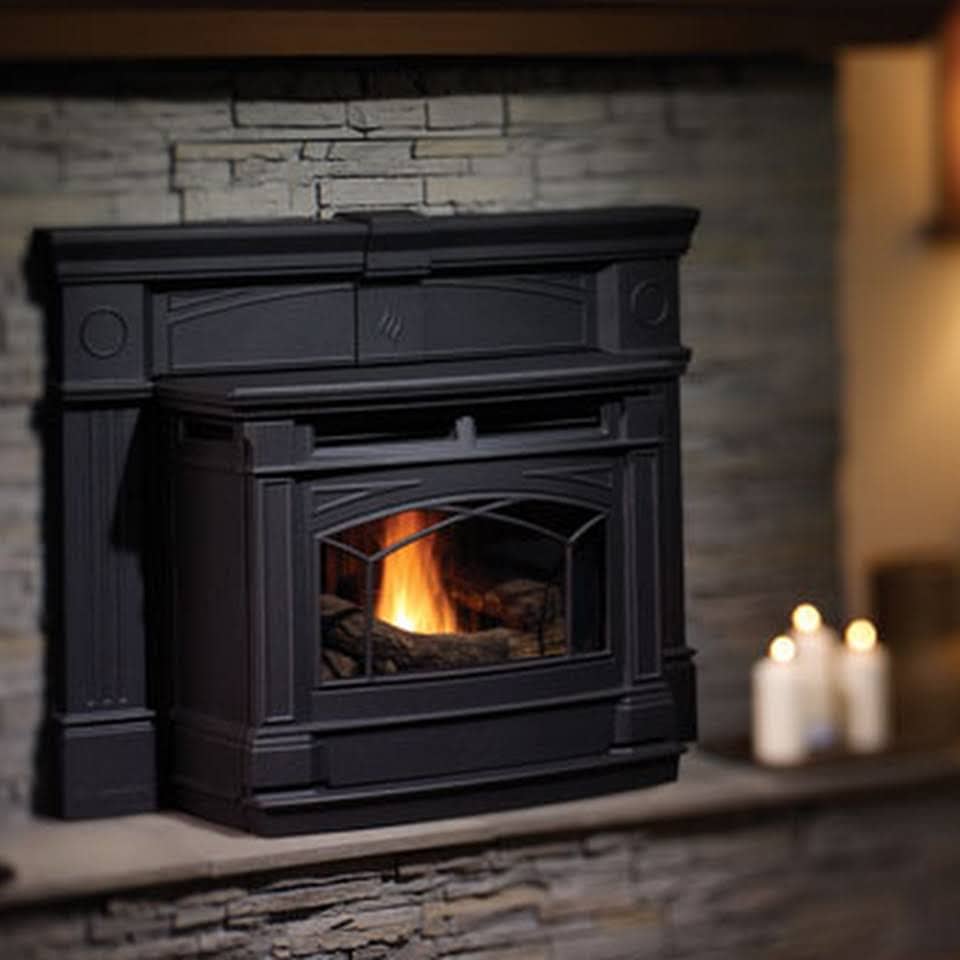
We install wood, pellet and gas stoves and run a retail stove store, so we can show you the options in person and give you a straight answer about which one fits your house. One thing that surprises people is that you can’t use the fireplace while it’s being restored. We’ll walk you through the schedule and the dust before work starts. If permits are needed, we handle them and work to local and Rhode Island code.
Want live answers?
Connect with a Certified Chimney Inspections expert for fast, friendly support.
Most homeowners ask about a new chimney for one of three reasons. A stove is going into a room that never had a flue, the fuel is changing, or the existing chimney is too far gone for repair to make sense.
If you’re moving from wood to gas or pellet, the flue often has to change too, and a change in fuel is one of the Level 2 inspection triggers. That’s why the inspection comes before the installation plan, not after. We install new chimney systems and handle conversions, and we’ll tell you if what you have can be saved instead. Whatever goes up, a cap goes with it, which is where the next question comes in.

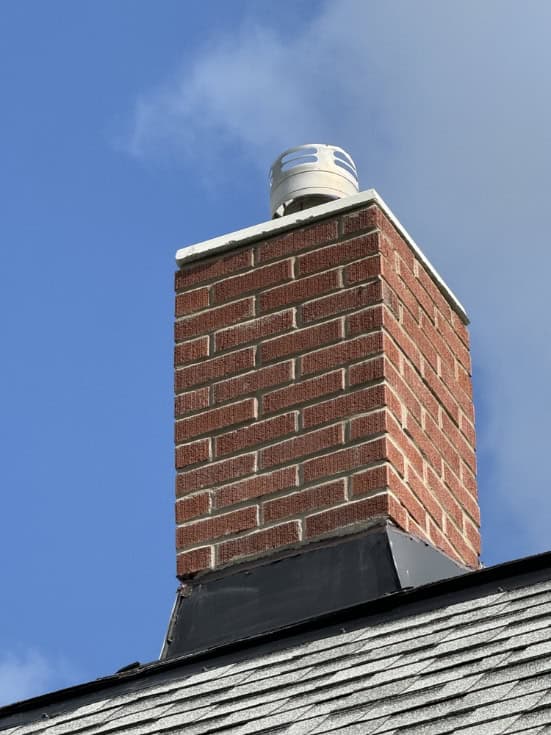
Almost always, and it’s the piece people forget. A cap keeps rain, animals and debris out of the flue, and the crown beneath it sheds water off the masonry. Skip them and you can rebuild a firebox beautifully, then watch water undo the work from the top down.
Caps come in a few forms. A single flue takes a standard cap, a chimney with several flues can take a multi-flue copper cap, and we also build custom handmade shrouds when a chimney needs something that fits the house. Liners are the other half. Many older Rhode Island homes were built without a proper one, and it’s one of the most common things a camera scan turns up. A liner gives smoke a sealed, correctly sized path out and protects the masonry around it.
We’ve come across jobs where a previous company replaced only the top flue and left the rest unfinished, and the homeowner assumed the chimney was done. That’s the partial-fix trap. The chimney looks handled from the street, and the real problem is still sitting in the smoke chamber or the lower flue. This is why we want the whole system looked at before anyone prices a restoration.
The cap, crown, liner, damper, smoke chamber and firebox all work together, and fixing one while ignoring the rest usually means a second bill later. Ask any company you’re considering to explain how the pieces connect on your chimney. A clear answer tells you a lot.
Ask for the certification, then check it. Anyone can print a logo on a truck. CSIA, the Chimney Safety Institute of America, certifies sweeps who pass an exam covering chimney systems, fire hazards and proper methods, and you can verify a technician at csia.org.
Our technicians are CSIA-certified and our team is listed on our website, and we’d encourage you to check us the same way you’d check anyone else. Beyond credentials, ask what you’ll get in writing. A good estimate separates cleaning, inspection and repair, names the inspection level and the reason for it, and comes with photos of whatever the company says is wrong.
If one company tells you a liner needs major work and something feels off, a second opinion with a camera scan is reasonable, not rude. Nobody should be offended that you want to see the problem.
We’re based in North Smithfield, in Providence County, and we work with homeowners from Woonsocket and Pascoag down through Bristol, Kent, Newport, Providence and Washington counties. If you live in a condo complex, check with your association and local officials before any fireplace or stove work, and we’ll help with whatever documentation they ask for.
If you remember a few things, make them these. Fireplace restoration covers the working parts of your fireplace, not only its looks, and Rhode Island’s older housing makes that especially true in Providence, Bristol and Newport counties. An inspection with photos tells you what you have before anyone talks about cost. A cap and a proper liner protect whatever you restore, and a stove is sometimes the better answer.
Our estimates are free, and in-house financing is available when a bigger restoration shouldn’t wait for savings to catch up. We don’t advertise discounts, but we’re happy to talk through your options. If you’ve got a fireplace you’re not sure about, Certified Chimney Inspections has been doing this work with the same group of people since 2000, and we’ll give you a clear picture without pressure. Reach out to Certified Chimney Inspections to set up a free estimate, and we’ll start with what’s actually inside your chimney.
Continue learning: