Summary:
You hire someone to look at your chimney. They climb up, climb back down, and hand you a list of repairs. Maybe every item is necessary. Maybe it isn’t. Either way, you’re standing in your driveway with no real way to check.
That uncertainty is why careful homeowners hesitate, and it’s a fair thing to hesitate over. We’re Certified Chimney Inspections, based in North Smithfield and working across Bristol, Kent, Newport, Providence, and Washington counties. Below, we cover what an inspection actually involves, which level you need, what a trustworthy report looks like, and how your part of Rhode Island changes the answers. First, a distinction that trips up a lot of people.
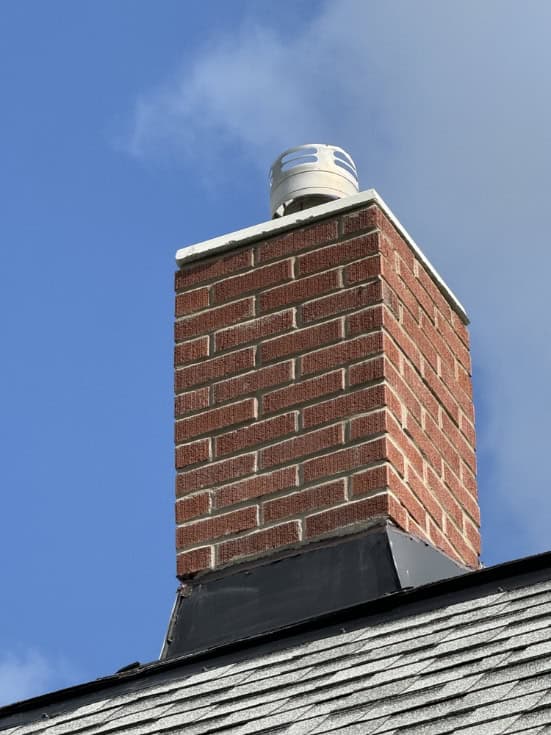
A chimney sweep cleans. A chimney inspection diagnoses. Plenty of Rhode Island homeowners have been told “it looks fine” after a quick sweep, but that isn’t the same as someone checking the liner, crown, flashing, damper, and cap.
The national standard, NFPA 211, calls for a chimney inspection at least once a year, and that holds whether you burn every night or light a fire twice a winter. A fireplace you barely use can still have a cracked liner or a cap that rusted through. Gas fireplaces and oil furnace flues count too, since exhaust and carbon monoxide have to get out safely.
The inspection tells you what’s going on. Cleaning, if it’s needed at all, comes after.
Chimney inspections come in three levels, and the right one depends on what’s happening with your house, not on how worried you are.
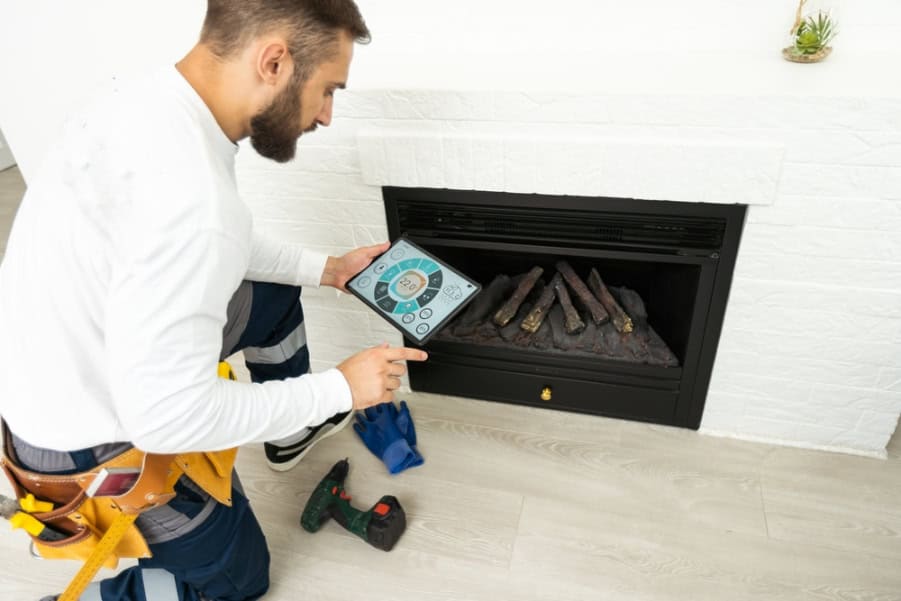
Level 1 is the routine annual check. A certified technician looks at everything reachable: the firebox, damper, visible flue, cap, and crown. If nothing has changed with your fireplace and you haven’t had a storm or fire problem, this is usually the right fit.
Level 2 adds a video scan of the flue and a look at the attic or crawlspace where the chimney passes through. The standard calls for it when a property is sold or transferred, when the fuel or appliance changes (say, a wood fireplace becoming a gas or pellet setup), and after a chimney fire or severe weather. If you’re buying an older home anywhere from Cumberland to Newport, this is the one that shows what the walls hide. It also helps if your insurer asks for proof that the chimney was checked, because a written report with documented findings gives you something to hand over.
Level 3 is invasive. Parts of the chimney or surrounding structure may be opened up when a serious hidden hazard is suspected. Most homeowners never need it.
Cost depends on the level, how many flues you have, how hard the roof and chimney are to reach, and what the technician finds. That’s why a quote over the phone is only ever a guess. Condo owners should ask their association who handles shared flues before booking anything.
Here’s the standard we’d hold any company to, ours included: you should see the problem before you hear the price.
That means photos of what the technician found and, for a Level 2, the video from inside the flue. You see the cracked tile or glazed creosote on a screen instead of taking someone’s word from the roof. It means a written report that names the firebox, liner, damper, and cap and says what condition each one is in. And it means being told which findings are urgent, which can wait a season, and which are cosmetic.
A good technician can explain that difference calmly, without a countdown clock. We can’t promise you’ll never hear about a repair. If something’s wrong, you should know. What you get from us is the evidence, a free estimate, and room to decide. For larger jobs, in-house financing is available so the cost doesn’t dictate your timeline.
Every technician here is CSIA (Chimney Safety Institute of America) certified, and you can see who’s who on our Meet the Team page. We’ve worked as the same group of people since 2000, which is over two decades, and the crew that inspects your chimney is the crew that fixes it. Still, don’t take anyone’s word for credentials. Ask any chimney company, us included, for proof of CSIA certification, Rhode Island contractor registration, and insurance. CSIA lets you verify certification at csia.org.
Want live answers?
Connect with a Certified Chimney Inspections expert for fast, friendly support.
Once you have the report, the next steps tend to fall into a few buckets, and none of them are automatic.
Chimney cleaning happens when the findings call for it. The usual trigger is about an eighth of an inch of sooty buildup, or any glazed creosote. The yearly rule in the standard applies to inspection, not sweeping, so a lightly used chimney may not need cleaning every year. A chimney cap keeps rain, animals, and debris out of the flue and is often a straightforward fix when one fails.
Bigger work includes liner repair or relining, repointing, crown and flashing repair, full fireplace restoration, or a new chimney installation for a stove. Spring and summer suit masonry and restoration best. Fall is another story, since local schedules often fill weeks ahead by September and October.
Rhode Island is small, but a chimney in Barrington and one in Burrillville live very different lives.
Along the shore in Bristol, Newport, and Washington counties—towns like Barrington, Bristol, Warren, Little Compton, Newport, Narragansett, and Westerly—salt air does the quiet damage. It corrodes metal caps, dampers, flashing, and liners. Humidity keeps masonry damp, and a nor’easter can push rain sideways into places a straight-down storm never reaches. That’s where caps matter most. We build custom handmade shrouds and multi-flue copper caps for homes that need more than an off-the-shelf part.
In Washington County, seasonal homes add a different question: a place closed up for months deserves a look before the first fire of the year. Newport’s historic homes bring another layer. Older masonry has to be repaired with preservation and code requirements in mind, so the fix isn’t always the quickest one.
Inland, in Providence and Kent counties, the pressure is the freeze and thaw cycle. Moisture works into small cracks, freezes, and slowly breaks down brick and mortar. Masonry around College Hill and Benefit Street in Providence is often 80 to 200 years old, and older homes may have flues with no liner at all. Spring is a good time to look, because winter damage often shows up only after the thaw. Homes in Cumberland, Smithfield, Coventry, and East Greenwich face the same cycle.
How often should my chimney be inspected? Once a year, even if you rarely use it. Gas and oil-fired systems are included.
Is an inspection worth it when I’m buying an older home in Newport or Bristol County? Yes, and ask for a Level 2. Historic homes often have flues and masonry you can’t judge from the living room, and finding out before closing gives you something to negotiate with.
Does a house in Warwick or Coventry need the same attention as one in Narragansett? The checklist is the same. The trouble spots aren’t. Inland homes in Providence and Kent counties tend to show cracking and mortar loss from freeze and thaw, while shoreline homes in Bristol and Newport counties lose metal parts to salt first.
How do I prepare? Clear the space around the fireplace or stove and tell us what you’ve noticed, whether that’s a smoke smell, water stains, or crumbling mortar. It helps us look in the right place.
Can an old fireplace be made safe again? Often, yes. Older homes are our specialty, and restoration usually means inspecting, rebuilding the masonry, and bringing it up to current safety standards. Projects typically take three to seven days.
Do you install stoves? We install wood, pellet, and gas stoves, and we have a retail stove store, so you can choose the stove and have it installed by the same people. In-house financing is available.
Do you give free estimates? We do, after we’ve seen what’s actually there.
Here’s what to take with you. Inspection and sweeping are different jobs. Annual checks apply even if you rarely light a fire. Level 2 matters when you buy, sell, switch fuels, or get hit by a storm or fire. And no matter which company you call, you should see photos or video and get a written report before anyone talks about repair work.
If you’d like that done by a crew that’s worked together since 2000, reach out to Certified Chimney Inspections. We serve homeowners across Bristol, Kent, Newport, Providence, and Washington counties, and we can walk you through which level fits your home. Fall schedules fill weeks ahead, so if the first cold snap is coming, an earlier appointment gives you more choice.
Continue learning: