Summary:
Rhode Island has one of the oldest housing stocks in the country. The median home here was built in 1961 — which means the average chimney is over 60 years old, and the liner inside it has likely never been replaced. Most homeowners have no idea what condition their liner is in, because there’s no way to see it from the outside. The chimney can look completely solid from the street while the clay tile liner inside is cracked, spalling, or missing sections entirely.
If you’ve recently had an inspection and been told you need a new liner — or if you’ve never had one and you’re not sure what’s going on inside your flue — this is worth reading.
The liner is the inner channel that runs through your chimney. It contains combustion byproducts — heat, gases, and carbon monoxide — and directs them safely out of your home. Without a functioning liner, those byproducts don’t just go up and out. They can seep through gaps in the masonry and find their way into your walls, your attic, or your living space.
In homes built before the 1980s, the liner is almost always clay tile. Clay tile was the standard for decades, and it works reasonably well — until it doesn’t. The problem is that clay tile cracks under the stress of freeze-thaw cycling, which Rhode Island sees plenty of every winter. Once water gets into a hairline crack, freezes, and expands, that crack gets wider. Over years and decades, a liner that looked fine can deteriorate significantly with no obvious sign from the outside.

This is the question most homeowners ask after an inspection turns up a liner problem — and it’s a fair one, because there usually aren’t obvious symptoms until things have gotten serious. You’re not going to see a cracked clay tile from your living room.
What you might notice, if things have deteriorated significantly, is a smoky smell when the fireplace isn’t in use, difficulty getting a good draft, or unexplained soot around the firebox. But in many cases, there are no noticeable signs at all.
That’s what makes a camera inspection so important. We run a video scope through the flue and look at the actual condition of the liner — not just the accessible parts at the top and bottom, but the full length of it. We’re looking for cracking, spalling (where the tile surface flakes and breaks away), gaps between liner sections, and areas where the liner has deteriorated enough to create an opening into the surrounding masonry.
For Rhode Island homeowners, the freeze-thaw issue is real and consistent. Winters here are hard on masonry. A liner that was installed in 1965 and has gone through 60 winters of thermal cycling, moisture infiltration, and seasonal stress is not going to be in the same condition it was when it was new. The question isn’t whether your older liner has experienced stress. It’s how much, and whether it’s reached the point where it needs to be addressed.
Gas appliances add another layer of risk that a lot of homeowners don’t think about. If you have a gas furnace, boiler, or water heater venting through an older masonry chimney, the lower flue temperatures from gas combustion cause condensation inside the flue. That condensation is acidic, and it accelerates clay tile deterioration faster than wood-burning use would. Many homeowners switch from oil or wood to gas and assume the chimney is still fine — but the liner that worked for an oil furnace may be actively degrading under gas use.
The honest answer is that the consequences range from inconvenient to genuinely dangerous, and they tend to get worse the longer the issue goes unaddressed. A liner that’s cracked or deteriorating doesn’t fail all at once. It fails gradually, which makes it easy to put off — right up until it becomes an emergency.
On the safety side, the most serious risk is carbon monoxide. CO is colorless and odorless, and a deteriorating liner can create a pathway for it to seep through masonry joints and into your living space without any detectable warning. There’s no smell, no smoke, no visible sign. CO detectors help, but the better approach is making sure the pathway doesn’t exist in the first place.
Chimney fires are the other major risk. Creosote — the residue that builds up from wood combustion — accumulates faster in a flue that’s the wrong size or that has rough, irregular surfaces from deteriorating tile. A chimney fire can reach temperatures exceeding 2,000°F. That’s hot enough to breach liner integrity, crack masonry, and ignite the wood framing around your chimney. Chimney fires are not always dramatic events that you’d notice immediately — many happen at lower intensity and go undetected, causing structural damage that only shows up later.
Beyond safety, there are practical consequences too. Homeowner’s insurance typically covers sudden damage from events like chimney fires, but not deterioration from age or neglect. If an inspector determines that a fire or CO incident was related to a liner that was already in poor condition, that can complicate a claim. And if you’re selling your home, a Level 2 chimney inspection — which is standard in most real estate transactions — will surface liner deficiencies that buyers and their agents will expect to be addressed before closing.
A failing liner is the kind of problem that tends to get more expensive the longer it waits.
Want live answers?
Connect with a Certified Chimney Inspections expert for fast, friendly support.
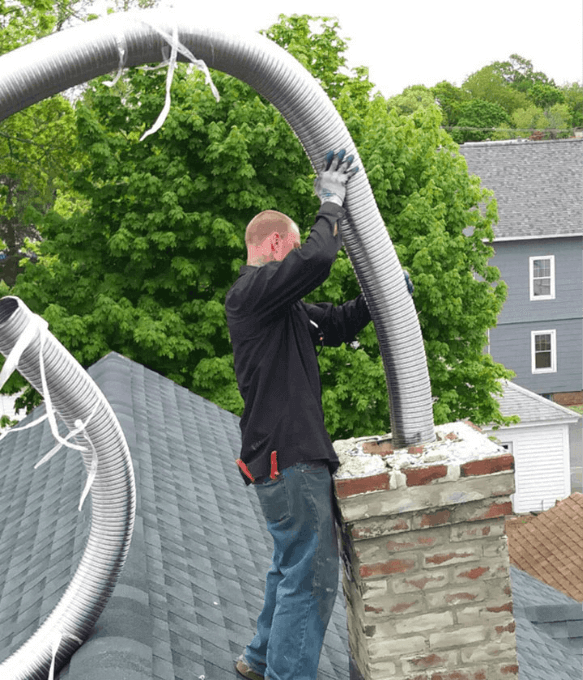
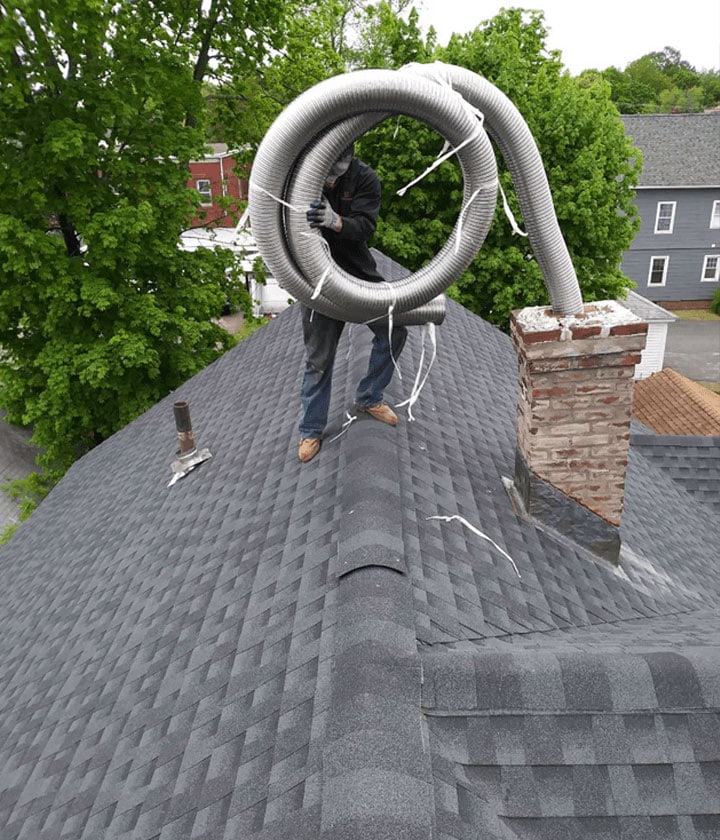
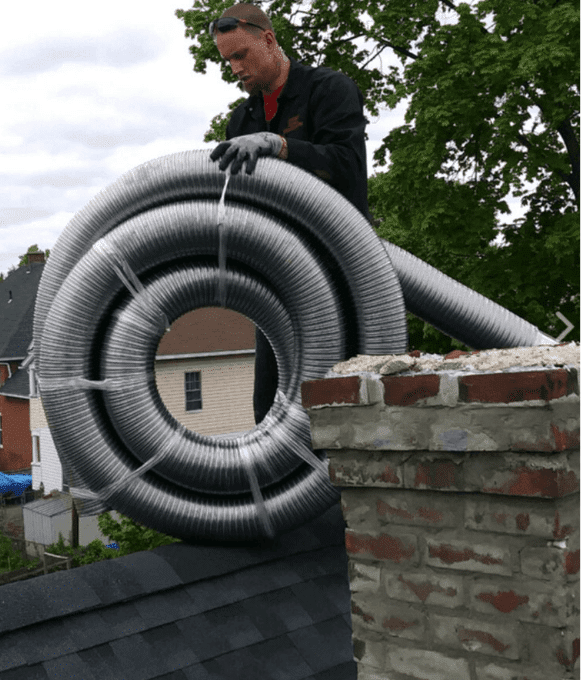
If you’ve been told you need a new liner and you’re not sure what that means in practice, here’s what the process looks like. The most common solution for older Rhode Island homes is a stainless steel liner — a flexible or rigid metal liner that’s sized to your specific appliance and installed inside the existing masonry flue.
The job typically takes a few hours for a standard installation. Before anything goes in, the flue needs to be thoroughly cleaned and inspected. Any debris, old liner fragments, or creosote buildup has to be cleared. Then the liner is sized — and this matters more than most people realize. A liner that’s too small restricts draft and creates pressure problems. One that’s too large causes excessive creosote buildup. Proper sizing is matched to the specific appliance it’s serving, whether that’s a fireplace, a wood stove, or a gas appliance.
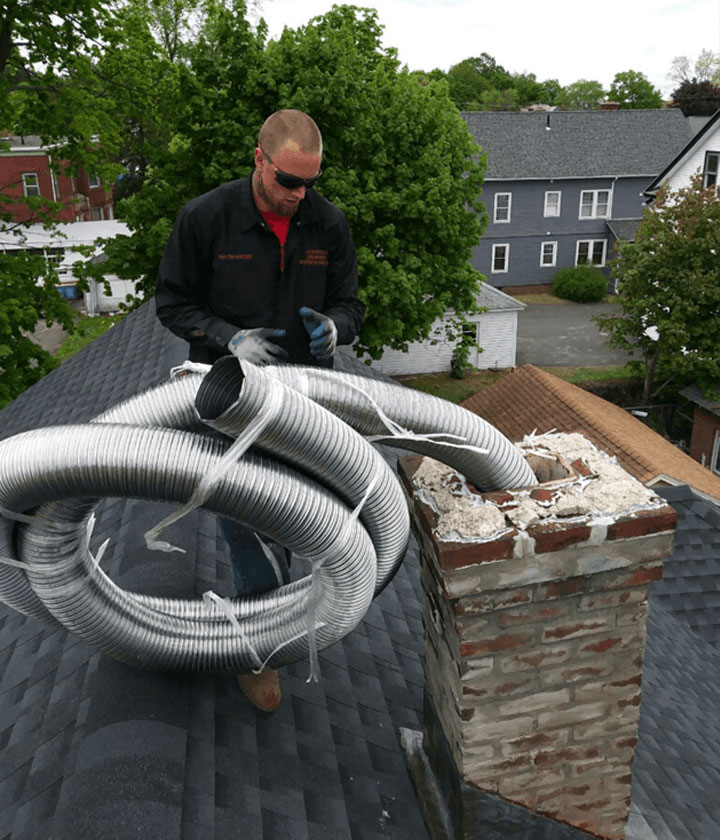
For most older Rhode Island homes, stainless steel is the practical choice — and for good reason. It’s durable, it can be sized precisely to the appliance, it handles the thermal stress of New England winters well, and it can be installed without tearing apart the existing masonry. A properly installed stainless steel liner can last 20 to 30 years with regular maintenance.
Clay tile liners are still used in new construction, but they’re rarely the right answer for relining an existing chimney. Replacing clay tile in a standing chimney is labor-intensive, expensive, and often impractical depending on the chimney’s configuration. For most homeowners who need to reline, stainless steel is the better fit.
Cast-in-place liners are a third option, typically used when the existing masonry is severely deteriorated. This process involves pouring a cement-based material inside the flue to create a new, continuous liner. It’s more involved than a stainless steel installation and is generally reserved for situations where the chimney structure itself has significant problems that a flexible liner alone can’t address.
One thing that often surprises homeowners: most liner manufacturers require that the liner be insulated as part of the installation to maintain the warranty. Insulation around the liner also keeps the flue warmer, which improves draft and reduces creosote buildup — two things that directly affect how well your fireplace or stove performs. It’s not an optional add-on; it’s part of doing the job correctly.
This catches a lot of homeowners off guard. You buy a new wood stove or gas insert, you’re excited about it, and then someone tells you that you also need a new chimney liner. It can feel like an upsell — but it usually isn’t.
Here’s why it matters. Your existing clay tile flue was sized for whatever appliance was originally in your home, which may have been a different fireplace, a furnace, or an oil burner. A new stove or insert has specific venting requirements — a particular flue diameter, a particular liner material grade — that your old liner may not meet. Using a liner that’s the wrong size for a new appliance creates draft problems and accelerates creosote buildup. Using a liner made of the wrong material for the fuel type creates a safety and warranty issue.
This is especially relevant for anyone who buys a stove through our retail store. We see it regularly: a customer purchases a quality wood or gas stove, and when we assess the installation, the existing liner isn’t compatible — either because it’s the wrong size, the wrong material, or already in poor enough condition that it wouldn’t be safe to connect a new appliance to it. In those situations, relining isn’t a surprise add-on. It’s a required part of the installation done correctly.
Rhode Island’s high heating costs make this worth thinking about practically, not just from a safety angle. The state averages the highest monthly heating costs in the nation. A properly sized, properly insulated liner improves combustion efficiency and draft — which means your stove or fireplace performs the way it’s supposed to. Getting the liner right is part of getting the full value out of the appliance.
We offer free estimates on liner installation, and in-house financing is available for larger jobs. If you’re planning a stove installation or have been told your liner needs replacement, the first step is just getting a clear picture of what’s actually there.
Most Rhode Island homeowners with older homes are living with a chimney liner that has never been inspected or replaced. That’s not unusual — it’s the norm. But given the age of the housing stock here, the winters we put these systems through, and the safety stakes involved, it’s worth knowing what you’re working with.
A failing liner isn’t always obvious. It doesn’t always announce itself. But the risks — carbon monoxide exposure, chimney fire, insurance complications, efficiency loss — are real and preventable. The good news is that chimney liner installation, done correctly, is a straightforward process that solves a serious problem and can last decades.
If you have questions about your chimney’s liner or want an honest assessment of what’s going on inside your flue, Certified Chimney Inspections has been doing this work in Rhode Island since 2000. Every technician on our team is CSIA-certified, we provide free estimates, and we’ll tell you exactly what we find in plain language — no pressure, no hidden fees.
Continue learning: