Summary:
If a chimney inspector has told you your liner is cracked, or your fireplace has started smoking when it never used to, or your heating bills have quietly climbed without a clear reason — the liner is often the common thread. It’s one of those things that doesn’t announce itself until the problem is already well underway.
Rhode Island’s climate is harder on chimney liners than most homeowners realize. The combination of coastal salt air, repeated freeze-thaw cycles through winter, and the sustained demands of a heating season that runs from October through April puts serious pressure on older clay tile systems. Stainless steel handles all of it differently. Here’s what you should know before making any decisions.
Clay tile liners have been the standard in masonry chimneys for generations, and they work reasonably well under stable conditions. Rhode Island’s conditions are not particularly stable. The state’s winters bring repeated cycles of temperatures rising above freezing and dropping back below it — sometimes within the same week. When water gets into even a hairline crack in a clay tile liner, it freezes, expands, and widens that crack. By February, what was a minor flaw in October can be a structural failure.
That’s before you factor in the salt air. If your home is anywhere near the coast — Newport County, Washington County, Narragansett Bay, or really anywhere in the southern half of the state — salt-laden air is accelerating the deterioration of mortar joints and tile surfaces year-round. It’s not dramatic. It’s gradual. But it adds up faster than most people expect, and by the time it’s visible, the liner has usually been compromised for a while.

Most conversations about chimney liners focus on safety — carbon monoxide, chimney fires, that kind of thing. Those are real concerns and worth taking seriously. But there’s another consequence of a deteriorated liner that doesn’t get nearly as much attention: your heating system starts working harder and delivering less.
A chimney liner’s job isn’t just containment. It creates the draft column that pulls combustion gases up and out of your home while drawing fresh air into the firebox or appliance below. When that liner is cracked, deteriorated, or improperly sized, the draft suffers. A fireplace that used to draw cleanly starts pushing smoke back into the room. A furnace or boiler that used to cycle efficiently starts struggling to vent properly, which means it runs longer, burns more fuel, and still doesn’t heat as effectively.
This is why some homeowners notice their heating bills climbing without any obvious explanation. The system itself may be fine. The problem is upstream, in the flue. A properly sized stainless steel liner restores that draft column, which means the appliance below it operates the way it was designed to. You get cleaner combustion, more efficient fuel use, and noticeably better performance — especially on the coldest nights when you need it most.
There’s also a Rhode Island-specific urgency worth knowing about. National Grid, which supplies gas service to a large portion of the state, will suspend gas service to a home if a chimney inspection reveals that the venting system is unsafe. For homeowners with gas furnaces, boilers, or water heaters vented through a masonry chimney, a failed liner isn’t a “schedule it when convenient” situation — it can mean no heat mid-winter until the problem is resolved. We see this regularly, and it’s one of the more stressful calls we get. Getting ahead of it before the heating season is always the better path.
When most people hear “stainless steel chimney liner,” they assume stainless steel is stainless steel. It isn’t. There are two primary grades used in chimney liner applications, and the difference between them matters significantly — especially in a coastal state like Rhode Island.
The more common grade is 304L. It’s widely available, lower in cost, and perfectly adequate for wood-burning applications in non-coastal environments. The problem is that 304L has limited resistance to chloride-induced corrosion — the kind that salt air causes. Use it in a home near the water, or in an oil or gas-fired system where the flue gases are more acidic, and you’re shortening the liner’s lifespan considerably.
The grade we install is 316Ti. The “Ti” refers to titanium stabilizers in the alloy, which give it significantly better resistance to corrosion from both salt air and the acidic condensate produced by oil and gas appliances. In Rhode Island’s coastal climate, this isn’t an upgrade for the sake of it — it’s the correct specification for the environment. A 304L liner installed in a Newport County home or a South Kingstown property near the bay is going to face conditions it wasn’t designed for.
This is one of those details that rarely comes up in a competitor’s quote, but it should. When you’re evaluating chimney liner installation options, asking what grade of stainless steel is being installed is a completely reasonable question — and the answer tells you a lot about how seriously the company thinks about material selection.
Beyond the grade, liner sizing matters just as much. An undersized liner restricts draft; an oversized one creates condensation and accelerates creosote buildup. Proper sizing is determined by the appliance’s BTU output, the height of the flue, and the specific venting requirements of the fuel type. This is where CSIA-certified technicians earn their credentials — getting the sizing right the first time means the system performs correctly from day one.
Want live answers?
Connect with a Certified Chimney Inspections expert for fast, friendly support.
The installation process is more straightforward than most homeowners expect, though it does require proper preparation and the right equipment. Before anything goes into the flue, the chimney needs to be inspected and measured — the existing flue dimensions, the height, and the appliance it will serve all factor into which liner diameter and configuration is correct.
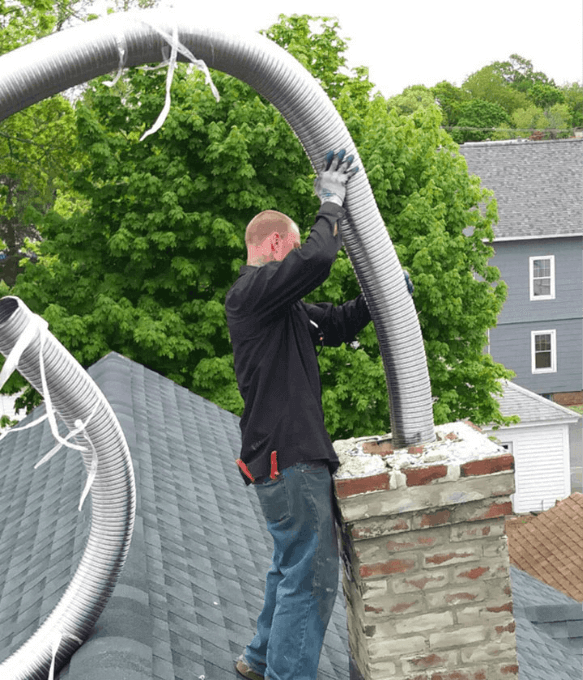
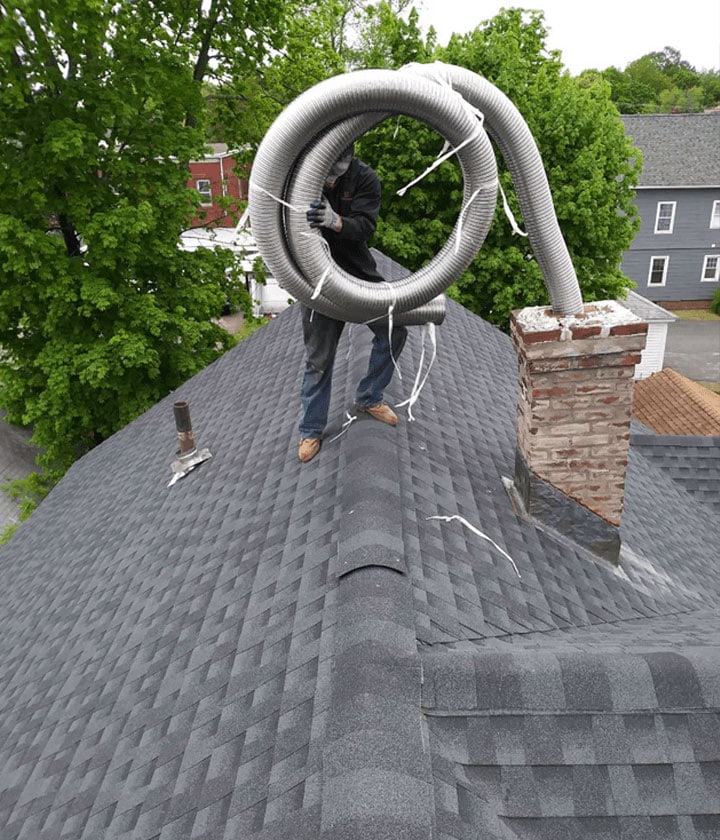
For most single-flue applications, installation takes somewhere between four and eight hours. The liner is lowered from the top of the chimney, connected to the appliance connector at the bottom, sealed at all connection points, and insulated where required by code. Post-installation, the system is tested to confirm proper draft and function before we consider the job complete.
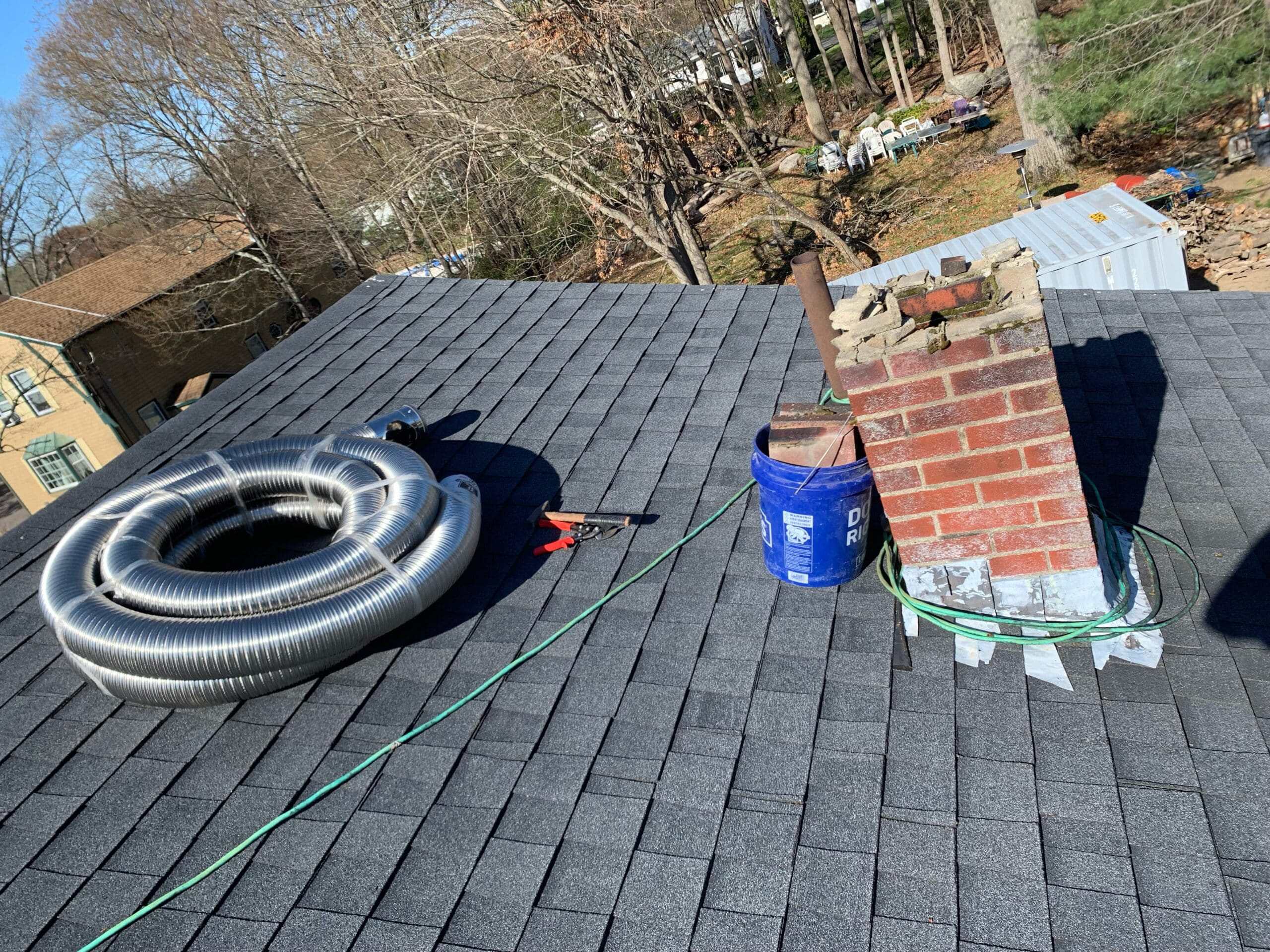
This is the question most homeowners want answered before anything else, and it’s a fair one. Chimney liner installation in Rhode Island typically runs between $1,500 and $4,000, depending on chimney height, flue diameter, and the type of liner required. For a standard 6-inch stainless steel system — which covers a large portion of residential applications — the average comes in around $1,750, and that includes a lifetime warranty on the liner material.
The range exists because chimneys aren’t all the same. A taller chimney in a three-story Providence triple-decker requires more liner material than a single-story ranch in Coventry. An oil-fired system requires a different liner specification than a wood stove. If additional repairs are needed — a deteriorated crown, failing mortar joints, or a damaged connector — those are separate costs that would be identified during the inspection and quoted before any work begins.
We offer free estimates on all installation and repair work, which means you can get a clear number before committing to anything. We also offer in-house financing for homeowners who’d rather not pay the full cost out of pocket at once. A chimney liner is a meaningful investment in your home’s safety and heating performance, and it shouldn’t have to wait because of cash flow timing.
One thing worth noting: the cost of delaying a liner replacement tends to compound. A deteriorated liner forces your heating system to work harder, which increases fuel costs over time. It also creates conditions — moisture infiltration, creosote accumulation, compromised flue gas venting — that lead to more expensive repairs down the road. The liner itself is usually the less costly fix compared to what comes after it’s ignored.
This is one of the most common questions we hear, and the honest answer is that you usually can’t tell from the outside. A chimney that looks perfectly intact from the street or the roofline can have a liner that’s been deteriorating for years. Clay tile damage — cracking, spalling, mortar joint failure — happens inside the flue where it’s invisible without a proper inspection.
The signs that something is wrong often show up indirectly. A fireplace that smokes when it didn’t used to. A carbon monoxide detector that triggers without an obvious source. A heating system that’s cycling more frequently or struggling to maintain temperature. Water stains on the ceiling or walls near the chimney. A smell of creosote or combustion gases in the living space. Any of these can point back to a liner problem.
The only way to know for certain is a Level 2 chimney inspection, which includes a video camera scan of the flue interior. This is the standard inspection required when selling a home, after any chimney fire, or after a change in fuel type — but it’s also the right call any time you have reason to suspect the liner’s condition. Rhode Island’s older housing stock means a significant number of homes have original clay tile liners that have never been assessed or replaced. If your home was built before 1980 and you’ve never had a liner inspection, that’s a reasonable starting point.
For homes that have converted from an older heating system to a high-efficiency gas boiler or furnace, relining is almost always required. High-efficiency appliances produce cooler, more acidic flue gases that clay tile liners aren’t designed to handle. The liner that worked fine with the old furnace may be actively failing with the new one — and the appliance upgrade alone doesn’t trigger a warning light. A chimney inspection after any significant appliance change is standard practice for exactly this reason.
A stainless steel chimney liner isn’t a luxury upgrade. In Rhode Island’s climate — the salt air, the freeze-thaw cycles, the long heating season — it’s the material that holds up where clay tile eventually doesn’t. The right grade, properly sized and installed, makes your heating system perform better, protects your home more reliably, and doesn’t need to be revisited every few years.
If you’ve been told you need to reline, or you’ve noticed any of the signs described above, the next step is a straightforward one: get a clear assessment from a technician who knows what they’re looking at. Our team has been doing this work in Rhode Island since 2000, every technician is CSIA certified, and we’re upfront about what you need and what you don’t.
Reach out to Certified Chimney Inspections for a free estimate — and go into winter knowing your chimney is ready for it.
Continue learning: