Summary:
Rhode Island offers incentives through OER, RI Energy, RI Commerce, and federal agencies for renewable energy and energy efficiency improvements. The question you’re probably asking: does chimney liner work actually qualify?
Most programs focus on measurable energy savings. The Home Efficiency Rebates (HER) program provides rebates to customers undergoing home energy improvements that reduce energy use by a minimum of 20%. That’s where things get interesting for chimney work.
Your chimney liner replacement alone might not hit that 20% threshold. But when you combine it with other heating system improvements, you could be looking at a different story entirely.
Here’s what most homeowners don’t realize about chimney liner efficiency. Chimney liners boost efficiency by preventing downdrafts from making your home unnecessarily cold and improving the fire’s fuel-burning efficiency by drawing air efficiently. Translation: your heating system drafts properly, cutting fuel costs by up to 15%.
Let’s put that in Rhode Island dollars. 54% of Rhode Island homes use natural gas heating, while another 32% rely on heating oil. Natural gas heating bills typically range from $80 to $180 during peak winter months. For oil users, it’s worse—annual heating costs can reach $2,560-$5,760.
A 15% reduction on a $4,000 annual oil bill saves you $600 yearly. Over the 15-20 year lifespan of a quality liner, that’s real money.
But efficiency isn’t the only factor driving costs in Rhode Island. 73% of the state’s housing stock was built before 1980, meaning most chimneys weren’t designed for modern efficiency standards. Rhode Island’s coastal climate affects chimney systems, requiring commercial-grade stainless steel liners designed for New England weather conditions.
Your old clay liner that’s cracking from freeze-thaw cycles? It’s not just a safety issue—it’s costing you money every month through lost efficiency.
The Upgrade & Save Rhode Island program offers homeowners up to $2,000 when they install new, higher-efficiency oil-fired furnaces or boilers, and/or a new aboveground oil storage tank. This program runs through the Energy Marketers Association of Rhode Island.
Now, this doesn’t directly cover chimney liners. But here’s the strategic angle that smart homeowners use.
When you’re upgrading your heating system to qualify for that $2,000 rebate, that’s exactly when you should address chimney liner needs. Proper installation is essential to extend the life of your chimney and improve heating efficiency. Most heating contractors will tell you the same thing—installing new equipment on an old, compromised chimney system is asking for problems.
Since rebates must be processed through a registered Rhode Island Bioheat fuel dealer, you’re already working with professionals who understand the connection between heating efficiency and proper venting. The timing works perfectly for tackling both projects together.
Think of it this way: you’re getting $2,000 back on heating equipment that will perform better and last longer when paired with a proper chimney liner. The liner becomes part of your overall heating system investment, not a separate expense.
Want live answers?
Connect with a Certified Chimney Inspections expert for fast, friendly support.
Federal incentives cast a wider net than state programs. Rhode Island homeowners can get up to 30% back through tax credits for energy efficiency improvements—generally up to $1,200 per year, but potentially up to $3,200 if improvements include heat pumps, heat pump water heaters, or biomass stoves.
The federal approach focuses on heating system efficiency rather than individual components. When your chimney liner work supports qualifying equipment installations, it becomes part of the overall project cost structure.
Consumers can save more than $1,000 per year by taking advantage of these energy efficiency incentives. The key is understanding how to package your improvements correctly.
Clean Heat RI offers rebates up to $1,000 per ton for high-efficiency electric heat pumps, and the program is substantial. Homeowners get $1,250 for every ton of heating capacity, with an additional $7.2 million allocated for enhanced incentives targeting low-income and disadvantaged communities.
Here’s where your chimney situation gets interesting. Heat pumps provide 2-4 times more heat per dollar spent on electricity and can reduce electric heating costs by 30-50% compared to traditional resistance heating during moderate Rhode Island winters.
If you’re switching from oil or gas to heat pumps, your existing chimney needs evaluation. Some homeowners seal chimneys when transitioning to electric heat. Others convert them for different uses. Either way, proper closure or repurposing requires professional assessment.
Heat pump incentives include weatherization requirements like air sealing and insulation that improve energy efficiency and prevent energy waste. Your chimney work might fall under these weatherization improvements, especially if you’re dealing with air leaks or heat loss through the chimney system.
The strategic move? Get a heat pump consultation that considers your entire heating system, including weatherization needs. This comprehensive approach often reveals whether chimney work should be part of your efficiency upgrade plan.
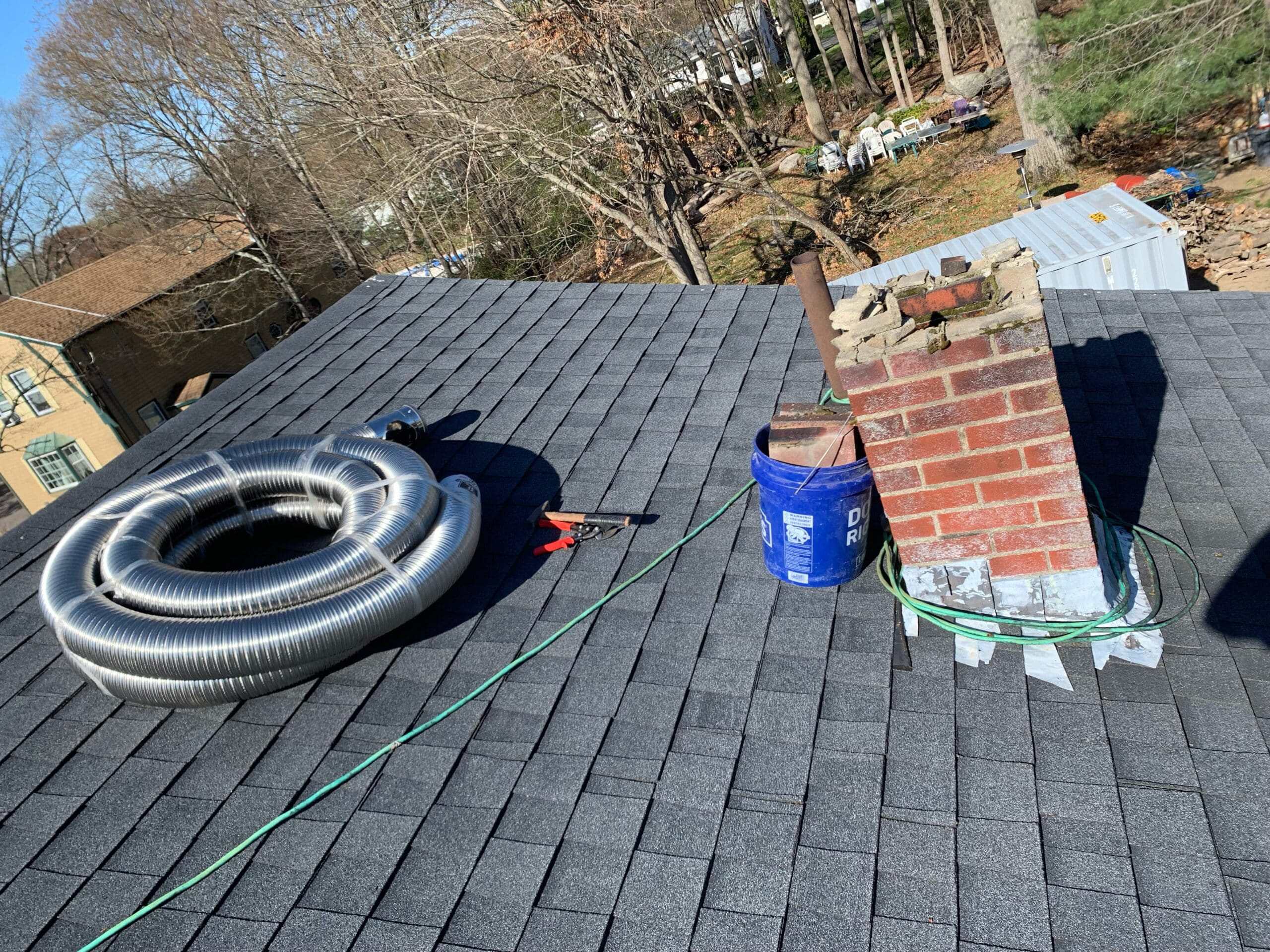
Let’s talk real numbers. Stainless steel liners recommended for Rhode Island’s climate typically cost $2,500 to $4,000 installed. Most homeowners spend between $1,500 and $5,000, depending on factors like chimney size, labor, and inspections.
That’s not pocket change. But here’s the return calculation that matters.
Proper heating system draft can cut fuel costs by up to 15%. For a homeowner spending $3,500 annually on heating oil, that’s $525 in savings per year. Quality chimney liners last 15-25 years, with some lasting up to 50 years. Do the math—you’re looking at $7,875 to $13,125 in fuel savings over the liner’s lifetime.
Stainless steel liners work best for Rhode Island’s climate, handle all fuel types, and resist corrosion from coastal moisture while managing temperature extremes better than alternatives. They last 15-20 years and work with all fuel types.
Beyond efficiency, there’s the safety factor. A proper liner prevents heat from escaping through cracked mortar, reduces fire risk, and prevents soot and creosote buildup while limiting moisture damage. Many insurance companies now require older chimneys to meet current safety codes.
When you factor in avoided repair costs, insurance compliance, efficiency gains, and any available rebates for related heating improvements, the investment makes financial sense. Especially when you time it strategically with other energy efficiency projects.
Rhode Island’s energy incentive programs won’t write you a check specifically for chimney liner work. But smart homeowners understand the bigger picture—strategic timing with heating system upgrades maximizes available incentives from Upgrade & Save RI, federal tax credits, and Clean Heat RI programs.
Rhode Island’s rebate programs aim to increase energy efficiency in homes, decreasing residential energy bills and carbon emissions. Your chimney liner replacement might be the safety and efficiency foundation that makes other improvements possible and more effective.
The key is approaching this as a comprehensive heating system investment rather than isolated chimney work. For Rhode Island homeowners ready to explore their options strategically, we can help assess your current system and explain how chimney improvements integrate with available incentive programs.
Continue learning: