Summary:
Rhode Island has the second-oldest owner-occupied housing stock in the nation. The median home here was built in 1964, over 60 years ago. That’s not just a fun fact; it’s a timeline that directly affects the chimney attached to your house. Standard clay tile liners last 15 to 20 years under normal use. If your home is more than a few decades old and you’ve never had the liner replaced, there’s a real chance you’re working with a system that has already outlived its design life. This guide is for homeowners across Bristol, Kent, Newport, Providence, and Washington Counties who want an honest answer, not a sales pitch, about when chimney replacement makes sense.
It’s no coincidence that chimney replacement is coming up more often across Providence, Newport, Bristol, Kent, and Washington Counties. Only New York and Washington, D.C. have older median housing ages than Rhode Island. That means the majority of homes in this state were built during an era when chimney construction standards, liner requirements, and fire safety codes looked very different from modern requirements.
A chimney built in 1964 and never substantially updated is now 60 years old. Its original clay tile liner, if it’s still the original, has been operating well past its expected service life for decades. That isn’t necessarily an immediate crisis, but it is something worth understanding before assuming another surface patch will hold up.

Rhode Island’s winters are hard on masonry. Every year, moisture works its way into small cracks in brick and mortar. When temperatures drop, that moisture freezes, expands, and widens those cracks. Then it thaws, contracts, and the cycle repeats. Over 40 or 50 winters, that process does real, cumulative damage to the mortar joints, the crown, the flue liner, and the overall structural integrity of the chimney stack.
Coastal properties in Newport County, along Narragansett Bay in Washington County, and throughout Bristol County face an additional layer of exposure. Salt air accelerates corrosion in metal chimney components, including caps, dampers, flashing, and liner systems, often faster than homeowners expect. A chimney that looks fine from the backyard may have interior damage that only a proper inspection can reveal.
That’s why the exterior appearance of a chimney is a poor indicator of its true condition. The most serious problems, such as cracked flue tiles, deteriorated liner joints, and compromised mortar inside the flue, are completely invisible from the outside. A video camera inspection is often the only way to see what’s happening inside a 60-year-old flue.
The freeze-thaw cycle is also why repeated repairs to the same area of a chimney are a warning sign worth taking seriously. If you’ve had the same section patched more than once in just a few years, the underlying structure may no longer be sound enough to hold a repair long-term. At some point, continuing to patch becomes more expensive than starting fresh, and far less safe.
This is the question most homeowners want answered before calling in a professional. It’s a completely fair question, because the difference between a repair and a full replacement is significant, financially and logistically.
Repair makes sense when the damage is localized. A cracked crown, a deteriorated chimney cap, spalling bricks on the upper section, or flashing pulling away from the roofline are issues that can typically be addressed without rebuilding the entire structure. Professional chimney cleaning, repointing deteriorated mortar joints, or replacing a single liner section can extend the life of a structurally sound chimney considerably.
Replacement becomes the more practical path when the damage is structural, widespread, or recurring. If the chimney has needed multiple repairs in the same spot within a short period, if the liner is cracked or collapsed along a major portion of its run, if the masonry below the roofline has deteriorated from water infiltration over many years, or if a chimney fire has occurred, replacement is worth evaluating seriously.
NFPA 211, the national standard governing chimney systems, requires a Level 2 inspection after any confirmed or suspected chimney fire before the system is used again. That inspection often reveals damage that makes a compelling case for replacement rather than repair. Chimney fires can reach temperatures exceeding 2,000°F, more than enough to crack clay tile liners and compromise mortar joints throughout the entire flue.
For homeowners in historic Providence neighborhoods like College Hill or Benefit Street, or in the historic districts of Bristol and Newport, there’s also the permit and historic preservation dimension to consider. Chimney work in those areas may require local approval for exterior modifications. That underscores the importance of working with someone who understands Rhode Island’s specific building codes and municipal guidelines, not just general chimney standards.
Want live answers?
Connect with a Certified Chimney Inspections expert for fast, friendly support.
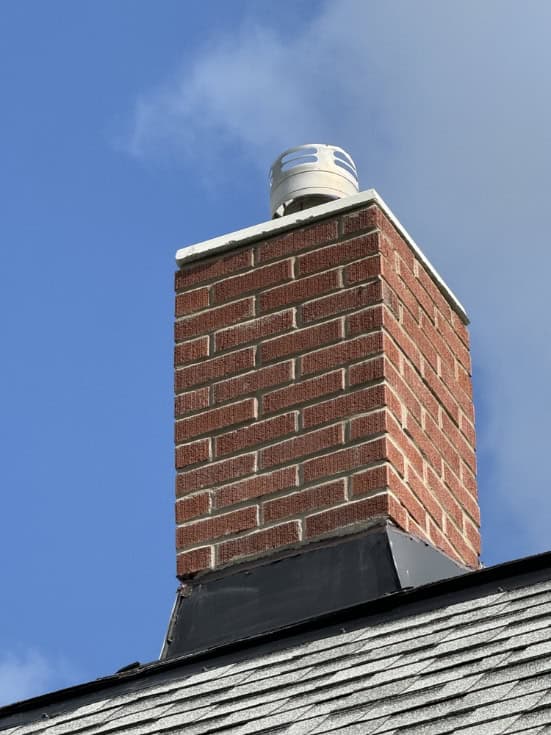
“Chimney replacement” means different things depending on the scope of the problem. A partial rebuild, which involves reconstructing the section of the chimney above the roofline, addresses damage to the visible stack without requiring work below the roofline. A full replacement involves rebuilding from the foundation up: a larger project typically reserved for chimneys with structural damage below the roofline or those that have experienced severe water intrusion over decades.
In either case, the work includes removing deteriorated masonry, installing a properly sized and code-compliant liner system, rebuilding with appropriate materials for the local coastal climate, and ensuring the new chimney meets current NFPA 211 standards. It’s never a one-size-fits-all job, and the scope should always be determined after a thorough inspection, not before.
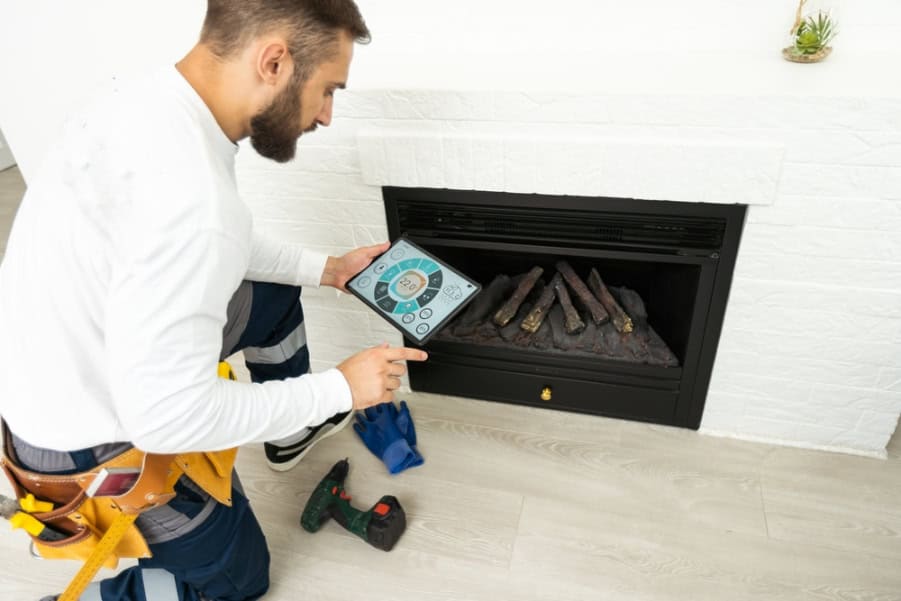
For many Rhode Island homeowners, a chimney replacement conversation happens alongside a broader look at the heating appliance it serves. If you’re replacing a chimney that vents an aging wood-burning fireplace, a gas insert, or an older oil furnace, it’s worth considering if the appliance itself is also nearing the end of its useful life.
Liner sizing is tied directly to the appliance it serves. A liner correctly sized for one appliance may not be appropriate for another. If you’re planning to upgrade or change your heating system at some point, that decision is worth factoring into the chimney replacement plan now, rather than discovering an expensive mismatch down the road.
We specialize in fireplace restoration and stove installations, including wood, pellet, and gas units, and we carry Regency fireplace and stove products backed by a 10-year manufacturer warranty. If your chimney replacement is happening alongside a fireplace upgrade or a new stove installation, we can handle both. This simplifies the project considerably and ensures the liner, the appliance, and the venting system are all matched correctly from day one.
For homeowners in Warwick, East Greenwich, or the broader Kent County area who are weighing a full system upgrade, this integrated approach tends to produce a cleaner, more durable result than piecing together work from separate contractors who aren’t coordinating with each other.
One question we hear often is if homeowner’s insurance covers chimney replacement. The honest answer: sometimes, but usually not for the reasons most people hope. Insurance policies generally cover sudden, accidental damage such as a storm-related collapse, damage from a chimney fire, or an impact from a falling tree. Gradual deterioration from deferred maintenance is typically excluded. That’s a strong reason to act before a slow problem turns into an emergency, because documented, proactive maintenance gives you a much stronger position if you ever need to file a claim.
Another common question is about permits. Yes, chimney replacement in Rhode Island typically requires a building permit, and the requirements vary by town. Providence, Newport, and Bristol each have distinct processes, and historic district properties often have additional preservation review steps. We understand Rhode Island’s building codes and municipal permit requirements across all five counties, from Providence down to Westerly, and we handle the paperwork as part of the job.
Homeowners also ask about timing relative to a home sale. If you’re selling a property in Washington County, Newport, or anywhere else in Rhode Island, a Level 2 chimney inspection is the standard benchmark for real estate transactions under NFPA 211. If that inspection flags issues, addressing them before closing is almost always less costly than a last-minute price negotiation or a delayed closing date. We’ve worked with plenty of homeowners who discovered chimney issues during a sale and needed a fast, documented resolution, and it’s a process we navigate efficiently.
Finally, people ask how long chimney replacement takes. The timeframe depends entirely on the scope. A partial rebuild above the roofline is typically a matter of days under fair weather conditions. A full replacement is a larger project, but it’s scheduled in phases and never requires you to vacate your home. We’ll give you a clear picture of the project timeline before any work begins.
If your home was built before 1985 and you haven’t had a thorough chimney inspection recently, that’s the right place to start. Not because something is guaranteed to be wrong, but because a 40- or 50-year-old chimney in Rhode Island’s harsh coastal climate deserves an honest look from an expert who can inspect the interior firsthand.
Every technician at Certified Chimney Inspections holds CSIA certification: not just the owner, but every single member of the team. We’ve been doing this work since 2000 with the same core crew, and we provide free estimates so there’s no financial barrier to getting a clear picture of your chimney’s true condition. We also offer in-house financing for larger projects, because a full chimney replacement is a meaningful investment and we’d rather help you complete it properly than see it postponed for another season. To protect your home and gain peace of mind before the next winter hits, contact Certified Chimney Inspections today to schedule your free, no-obligation estimate.
Continue learning: